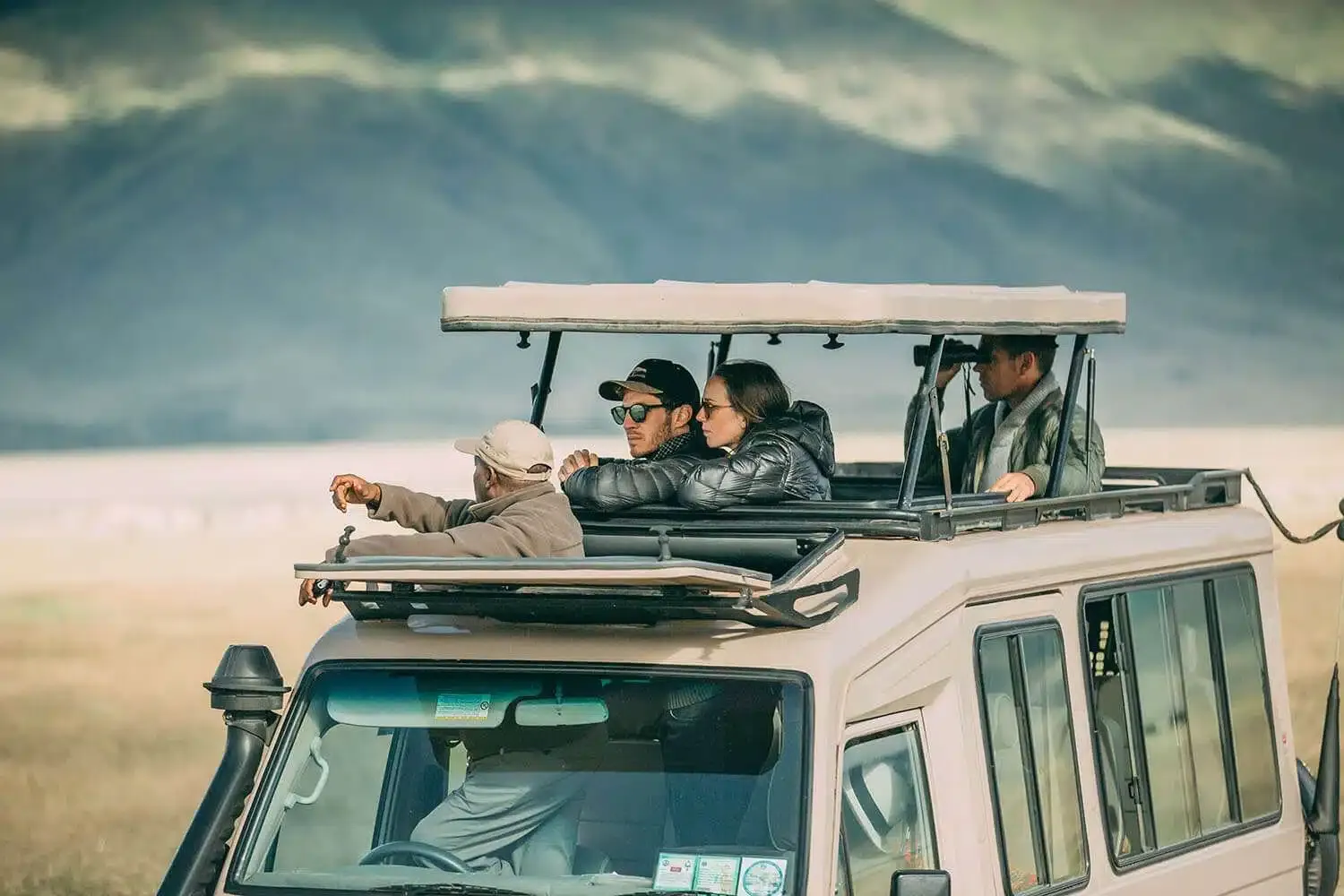
Together all the way
The classic northern route · Seven to ten nights
The classic route, with everyone in the same camps and the vehicles moving as one. It suits groups that like to compare notes over every meal.

Your Experiences
Nothing added yet — experiences you add from any page will appear here.
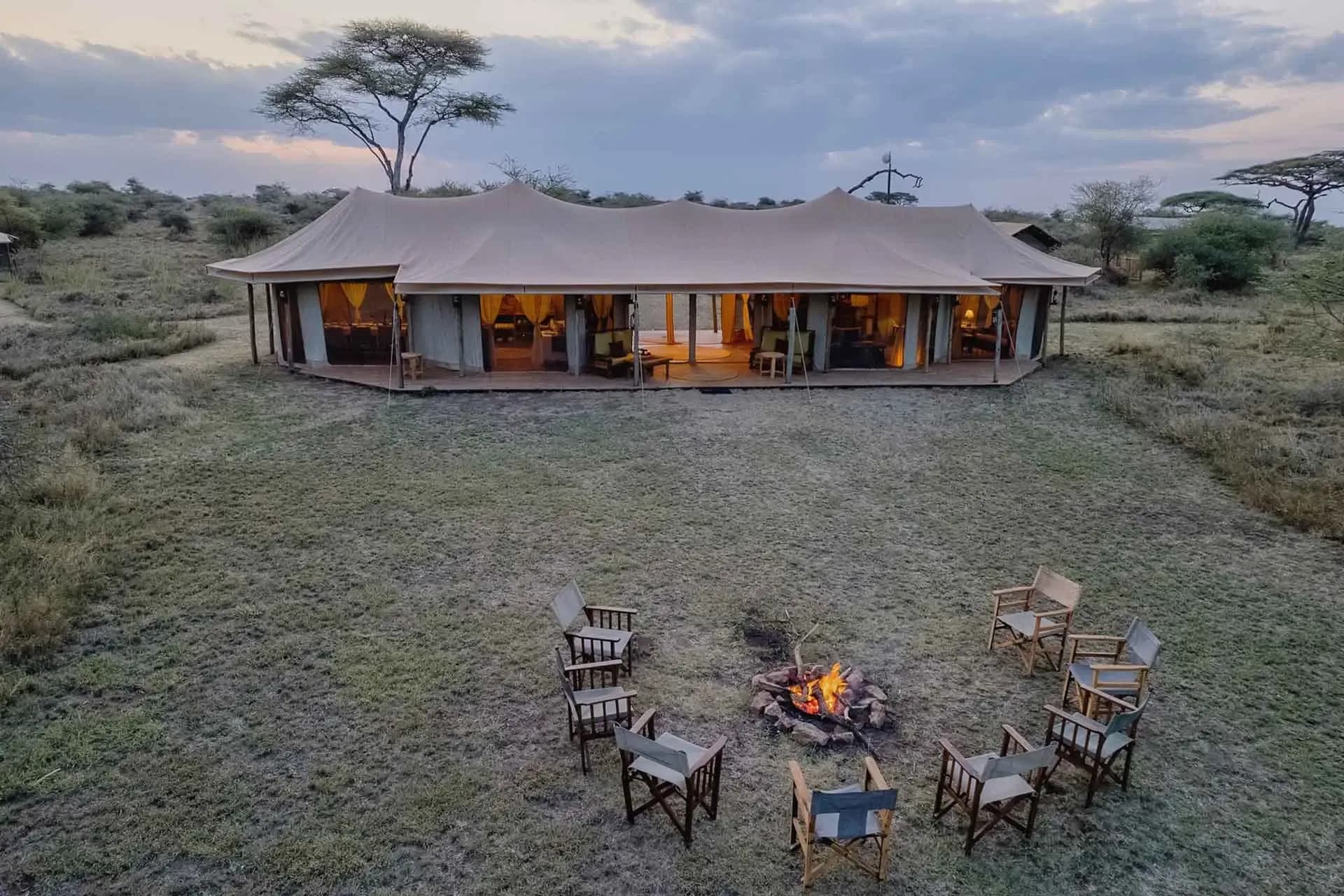
You have been saying “we should go” for years.
A private safari for your own people: your dates, your own vehicles and guides, and nobody you have not invited.
The first conversation
Somebody has a spreadsheet. Somebody else cannot do those dates. One of you wants to walk, one wants a pool, and the group chat has gone quiet since the last time anyone suggested a month. A safari is far easier to enjoy together than to organise together.
Four questions settle most of it. Take them in this order, and we will help the group agree.
Two ways to travel in a group
A small private group and a group departure sound alike, and they are different trips.
You bring the people: friends, two or three couples, a birthday party. The dates are yours and the route is built around your group. Nobody joins unless you have invited them, and we add vehicles and guides as the numbers grow.
We set the dates and the route, and guests join: groups of eight to twelve, four guests to a vehicle and a window seat for each. A good fit if you would like to meet people, or you are travelling on your own.
Not sure which suits you? Tell us who you are travelling with, and we will say.
Why Tanzania
A group needs more variety than a couple does. Someone wants birds, someone wants a lion, someone wants a long lunch. Tanzania has room for all of that: the plains of the Serengeti, the Ngorongoro Crater, elephants at Tarangire, the wilder south and a coast to end on. It is all planned by one team in Arusha, which matters more the more people there are.
If you are lucky enough to see a pack of African wild dogs wake from an afternoon rest, you may watch them gather in a noisy greeting and then, apparently, take a vote. Researchers in Botswana found that the more dogs sneezed during the gathering, the more likely the pack was to set off hunting. A few sneezes from the dominant pair were enough. Without them, it took about ten. Nobody can yet say whether it is a true vote, but it is a fair picture of a group deciding where to go next: loud, not entirely equal, and settled quickly.
Wild dogs live in the south, in Ruaha and Nyerere. They roam widely and are never guaranteed.
When tastes differ
It will. The trick is to plan for it in advance, so that nobody has to give way on the day.
Each vehicle has its own guide. They can go to the same sightings together, or split up when tastes differ.
Some people rest at camp while others walk or fly. Nobody has to pretend to want the same day.
The route stays the same while rooms and some activities can differ. Tell us the range and we will see what works.
The shape of it
Groups tend to land on one of these, with the number of nights set by whoever has the least leave.
The classic northern route · Seven to ten nights
The classic route, with everyone in the same camps and the vehicles moving as one. It suits groups that like to compare notes over every meal.
Safari first, then the coast · Nine to twelve days
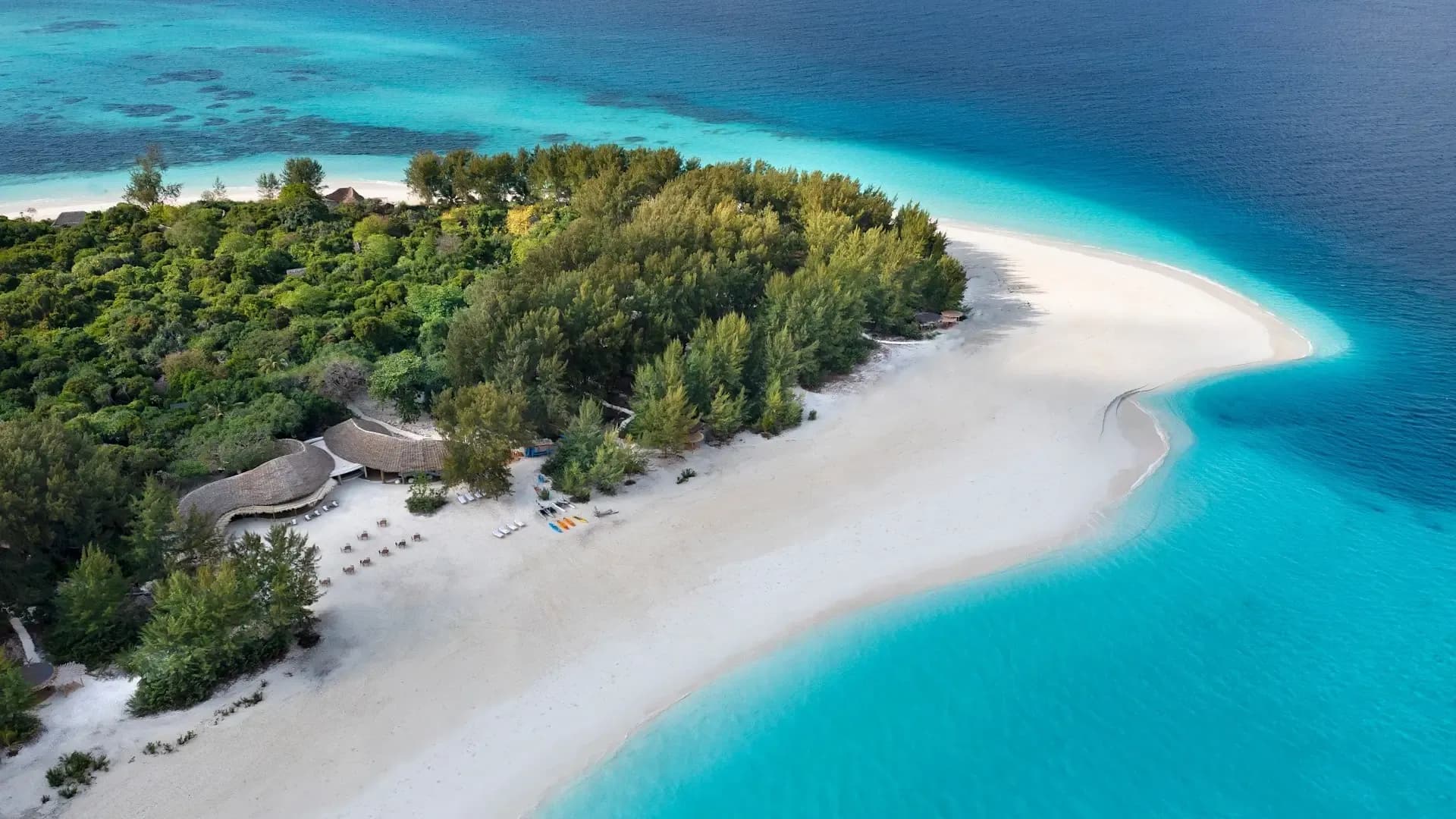
Bush first, then three or four nights on Zanzibar or Pemba, where the group can scatter for the day and meet again for dinner.
The southern parks · Seven to ten nights
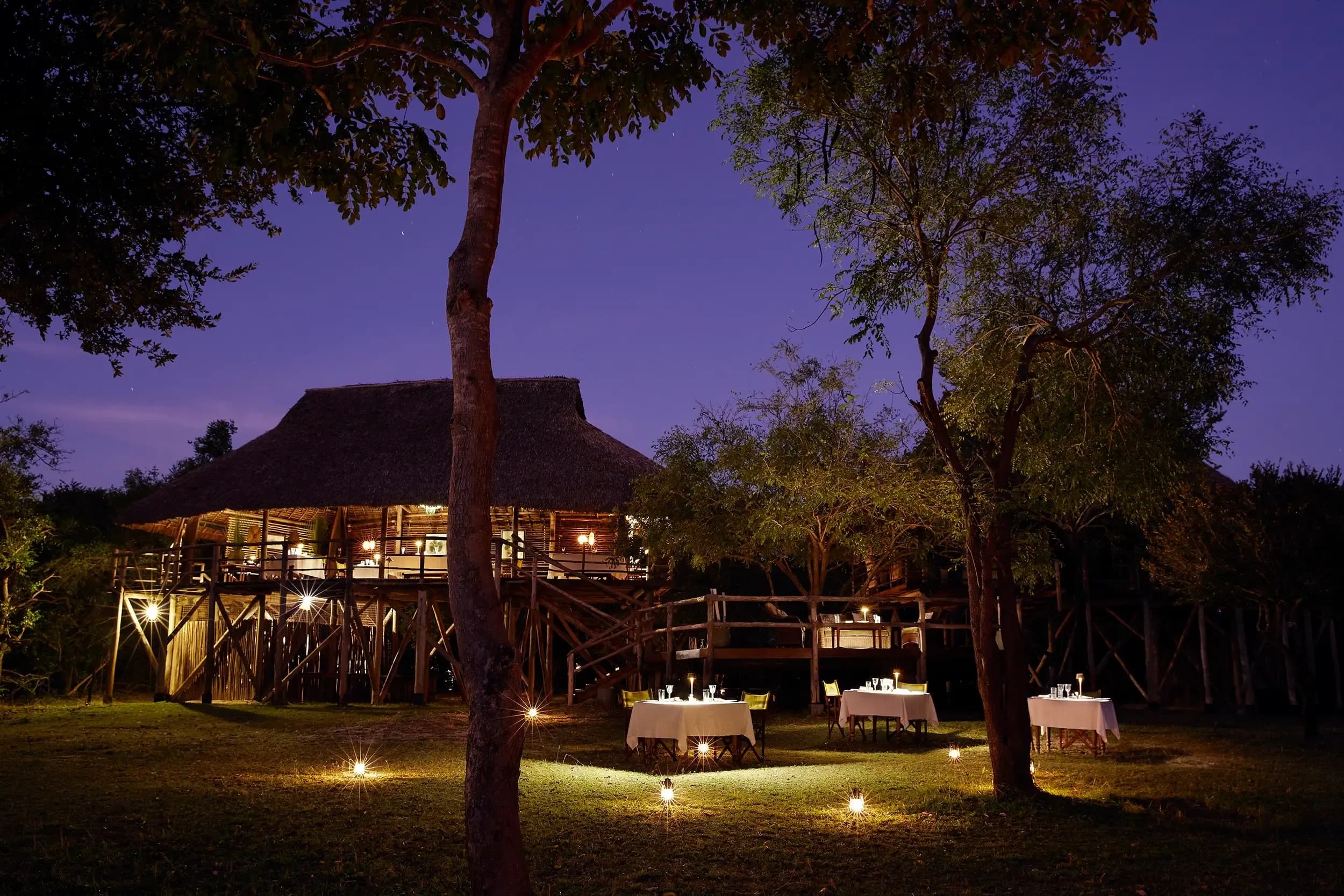
The south is quieter, with walks, boats and fly-camping at some camps. Mostly fly-in, and best in the dry months.
Look at the Northern Circuit →Look at the Southern Circuit →
A day, usually
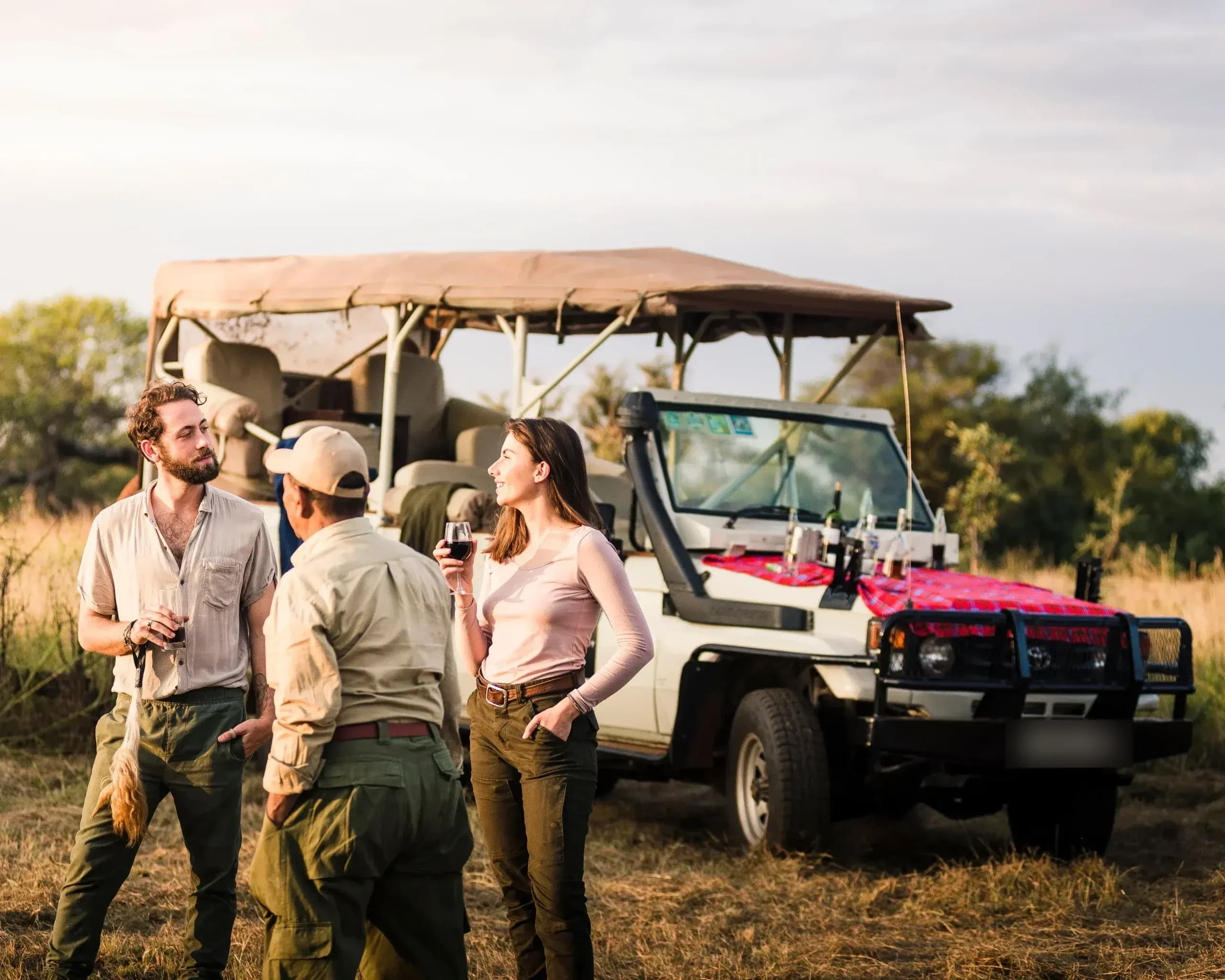
The animals will not follow the group’s plan, which is half the fun. This is how the days tend to run.
Everyone together, settling the day over coffee.
Each vehicle heads out with its own guide. Stay together or wander apart, as the group likes.
Lunch at camp, a rest for some and a walk for others.
A second drive, in the best light of the day, and the first telling of the stories.
Dinner at a long table, and the argument about whose sighting was the best.
Seats and distances
The question changes with numbers: seats on a plane are fewer than seats in a vehicle.
| Factor | Fly in, by light aircraft | Overland, in your own vehicles |
|---|---|---|
| Time | Around an hour in the air to the Serengeti, so everyone arrives fresh. | A long day on the road to the central Serengeti. |
| Keeping together | A scheduled flight is shared with other passengers, and seats can be limited. A group can charter an aircraft, which keeps everyone together on your timetable. | Your own vehicles, travelling together or apart as you like. |
| Luggage | Most light aircraft cap each traveller at around 15 kg, in soft bags, hand luggage included. | Soft bags are still easiest, but nobody is weighed. |
| Paying for it | Flights are charged per person, or per aircraft if you charter. | No flights to pay for. The vehicles and guides are already part of the plan. |
| Suits | Longer trips, the Serengeti, the south and the coast. | The short first leg, and groups who like to see the country. |
A common pattern: drive the short first leg together, then fly on. With a larger group, ask about a charter, since the seats add up.
Where you sleep
The hardest part of a group booking is finding a camp with room for all of you at once. This is what we check before we suggest one.
Many small camps have only a handful of tents, so we check that the whole group can stay together.
Twin, double or single, arranged around who is sharing with whom.
Whether the group can sleep near each other, or would prefer a little distance.
Whether the camp can seat the whole group together for dinner, and how it handles it.
Whether the camp can provide one when you are more than five or six.
How the camp keeps guests safe at night, and how far the nearest medical help is.
Your days
Things to do together, apart or in shifts.
The balloon flights start before sunrise at launch sites that include Seronera, last about an hour and end with breakfast in the bush. A basket usually carries several guests, which suits a group.
Group walks with an armed ranger, at camps and reserves that allow them. The south suits this best, since the Serengeti permits walking only in a few wilderness areas.
At Nyerere, a boat takes you along the lakes and the Rufiji, with hippo and crocodile in the water and elephant coming down to drink.
After dark, night drives are possible only in private reserves, because the national park does not allow them.
Tell us the occasion: a birthday, a reunion, an anniversary. We plan around it, from the camp to the evening.
Nobody is dragged out at dawn. A first-light start and a full day out only happen if the group asks for them.
The animals will not take a group vote. We choose the right place and the right hour, and leave the rest to the day.
On a private trip you bring the people and choose the dates, and nobody joins unless you invite them. A group departure is the opposite: we set the dates and the route, and guests join, in groups of eight to twelve with four to a vehicle and a window seat for each. If you want to travel with strangers, choose a departure. If you want your own people, this page is the one.
There is no fixed number. A vehicle seats six and we usually suggest four or five, so a group of eight travels in two vehicles, each with its own guide, and larger groups need more. We also check that the camps can take everyone at once.
Plan for it early. With two vehicles and two guides, the group can visit the same sightings or split up. Some people can rest at camp while others walk or fly. Tell us who likes what and we will build the days around it.
No. Rooms are arranged around who is sharing with whom: twin, double or single, wherever a camp offers them.
Often, yes. The route stays the same while the rooms and some activities differ. Tell us the range and we will see what works.
Usually. The guide and vehicle are shared by four or five of you instead of two. Flights and rooms are still charged per person, so how much you save depends on the route.
Yes. Tell us the occasion and who is coming, and we will plan around it, from the camp to the evening.
Start early, because camps need enough rooms free at once. Nine to twelve months ahead suits July to October, six to eight months can work, and we plan trips at short notice too, with fewer camps to choose from.
Pick the month with the most dates the whole group can make, and we will choose the place to suit it. July to October is dry, with the herds in the northern Serengeti. The southern plains hold the calving from January to March. April and May are green and quiet, with some camps closed.
Each person on the trip must hold premium travel insurance before travelling. For malaria and vaccinations, everyone should see a doctor or a travel clinic well ahead of the trip.
Getting started
You do not need to know the camps, or to have the group agreed. Tell us who might come and when, and we will build from there. Booking close to the date? Ask us what is open.
Your planners
East Africa Safari Guides is Tanzanian owned, with its office in Arusha. The people who answer your questions live here and know the camps, the roads and the seasons from experience.
Tanzanian owned, and working from Arusha since December 2021.
Nine out of ten people who work with us live here.
Ten girls go to school each year on our funding.
What it costs
Travelling in a group usually brings the cost per person down, because the guide and vehicle are shared by four or five of you instead of two. What moves it: the season, the camps, the mix of rooms, flights (charged per person, or per aircraft if you charter), how many vehicles the group needs, and how long you stay.
No two groups are alike, so we do not sell fixed group packages or publish a price list. Tell us what the group can comfortably spend, and we will show what it buys, where the group could save, and what is worth paying extra for.
Every quote lists what is included and what is extra, so the group can compare it fairly with any other.
When to go
The animals follow the rain, so the best month for your group is partly a matter of diaries.
| Months | On safari | On the coast | For a group |
|---|---|---|---|
| January to March | The calving season on the southern plains, busiest around February, with green grass and passing showers. | Hot and mostly dry, though a north-east wind can bring seaweed ashore on the east coast. | A strong choice if the group wants young animals, with warm evenings. |
| April and May | The long rains bring green country, empty roads and some closed camps. | The wettest stretch, worst in April, and many east-coast hotels close. | Only for a group with flexible dates. |
| June to October | Dry weather and the biggest crowds, with the herds in the northern Serengeti from July. | Dry and settled, with the south-east wind blowing steadily on the east coast. | For July to October the camps fill first, so start planning nine to twelve months out. |
| November and December | The short rains arrive and the herds begin heading south. | Warm and humid, with the festive weeks the busiest. | Quieter bush, then a crowded coast at Christmas. |
Check the herds’ movements month by month →.
Numbers, a possible month and the mood of the group are enough for a first reply.
Begin the conversation+255 753 744 283 · hello@easguides.travel