+255 753 744 283 | Mon–Fri 8:30AM–5PM · Sat 9AM–4PM EAT
EAST AFRICA · EST. 2021

Your Experiences

Nothing added yet — experiences you add from any page will appear here.

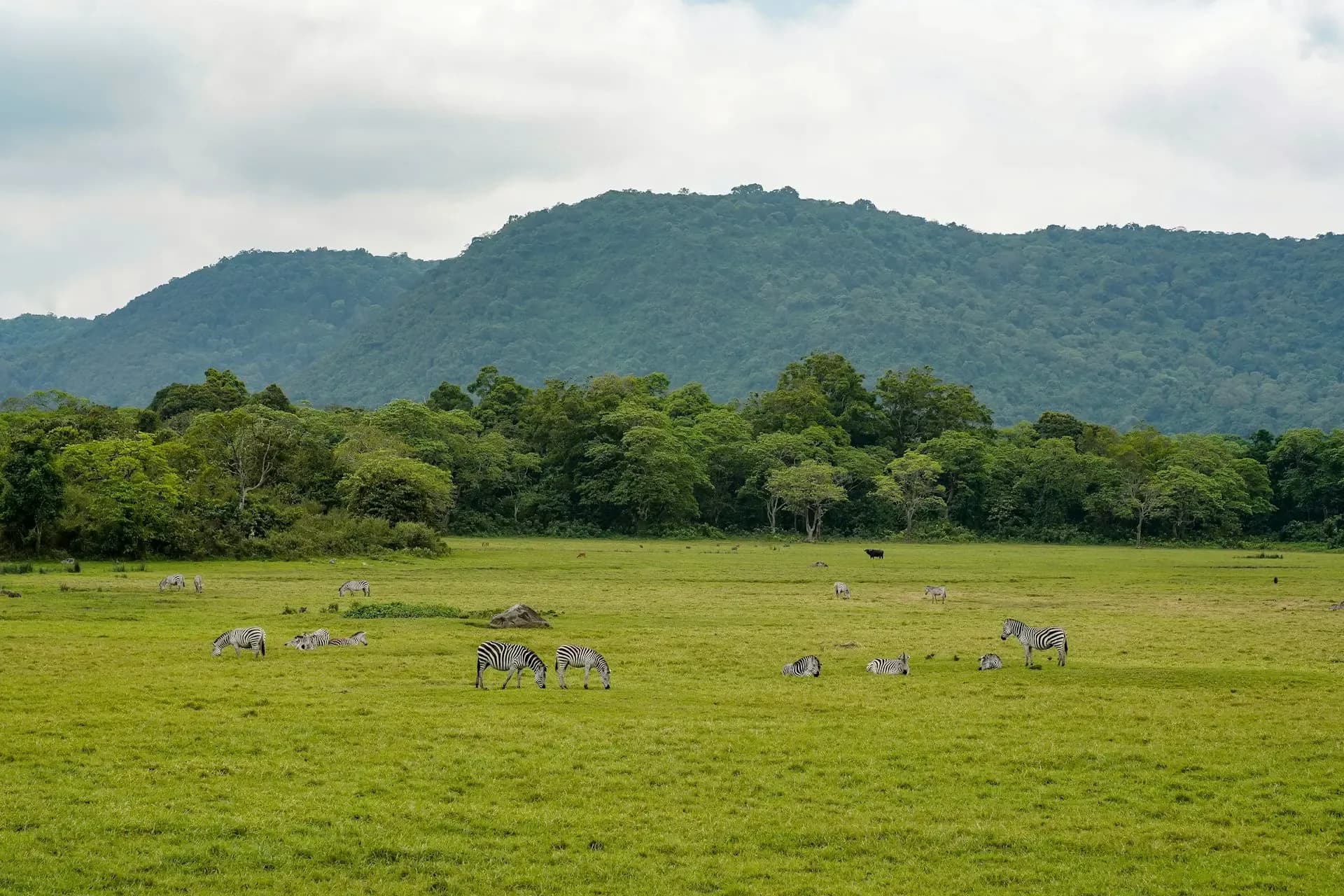
Zebra grazing on a green plain with forested hills behind

Arusha National Park

A small park under a big mountain, best explored on foot.

Why Arusha National Park

Small park, big mountain

Most visitors pass the gate on their way somewhere else, and it is easy to see why. There are no lion prides to wait for and no Big Five to tick off. What the park has instead is shape. In a compact area it holds a volcanic mountain, a swampy crater, a string of shallow lakes and highland forest, all close to Arusha.

Mount Meru, a dormant volcano and the second-highest mountain in Tanzania, dominates the park at 4,566 metres. On a clear morning Kilimanjaro stands to the east. Forest, water and open grass mean that giraffe, buffalo, zebra and black-and-white colobus monkeys can all be seen on the same short drive, and the colobus are hard to find elsewhere on the Northern Circuit.

Continue readingShow less

On foot, with a ranger

With few large predators, Arusha National Park is one of the few places on the Northern Circuit where guided walks are a normal part of a visit. You go with an armed ranger, and you walk among giraffe and buffalo, with monkeys in the trees overhead.

How we plan it

It earns a half day at the start or end of a trip, and a night if you want the walks, the canoe and an unhurried morning. It also suits a first afternoon after a long flight, because it asks very little of you.

Best months
Good all year. June to October is driest, with the clearest views of Kilimanjaro and Meru. November to May is green.
Getting there
About forty minutes by road from Arusha, so it fits neatly at the start or end of a trip.
How long
Half a day at the least. One night if you want walks and canoeing.
Pairs well with
Tarangire and Lake Manyara next, or a Mount Meru climb as acclimatisation before Kilimanjaro.

When to go

The year, usually

Northern Tanzania has two rainy seasons and a long dry one. Here is what each means at Arusha National Park.

January and February

Warm and green, with clear spells that can show both mountains. Migrant birds are in.

March to May

The long rains. Cloud hides Meru and Kilimanjaro, paths turn muddy, and the park is at its quietest and greenest.

June to October

The dry season, with the clearest views of Kilimanjaro and Meru. Cool mornings, and the best months for the Meru climb.

November and December

The short rains. Showers, fresh green and good birding on the lakes.

Inside the park

Three parts of one small park

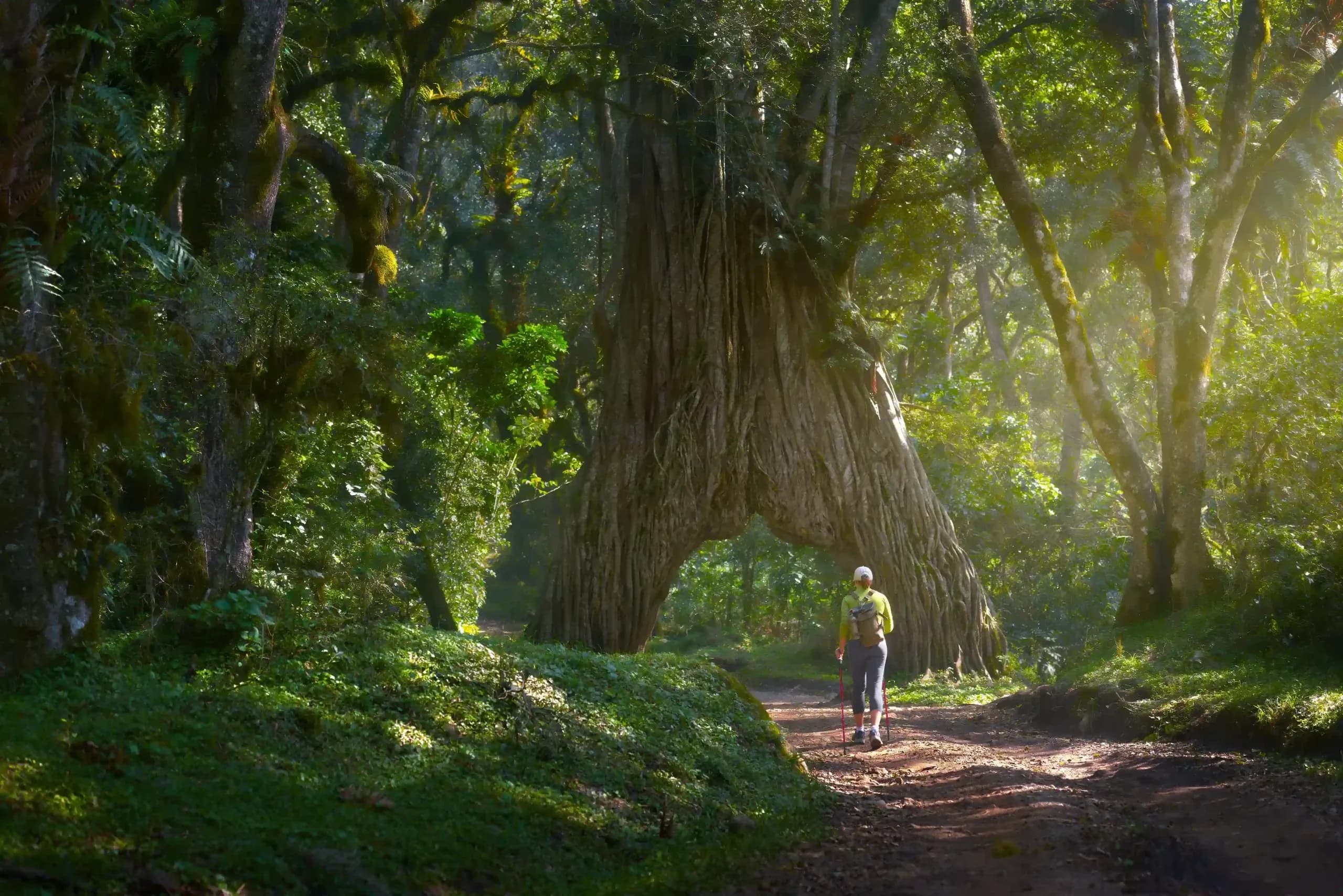
A walker on a dirt track passing beneath a huge fig-tree arch in dense green forest with sunlight through the leaves

The forest road and the crater rim · Good all year

Ngurdoto Crater

Ngurdoto is sometimes called Little Ngorongoro. Its floor, about three kilometres across, is a swamp ringed by steep walls, and buffalo and warthog are the usual residents. You look down on it from the rim.

The forest road up to the rim is where the colobus monkeys live, black and white against the green, moving between the trees. They are shy of vehicles but easy to watch if you stop and wait.

On the day

The rim is forested and can be misty in the morning. Binoculars matter more here than anywhere else in the park.
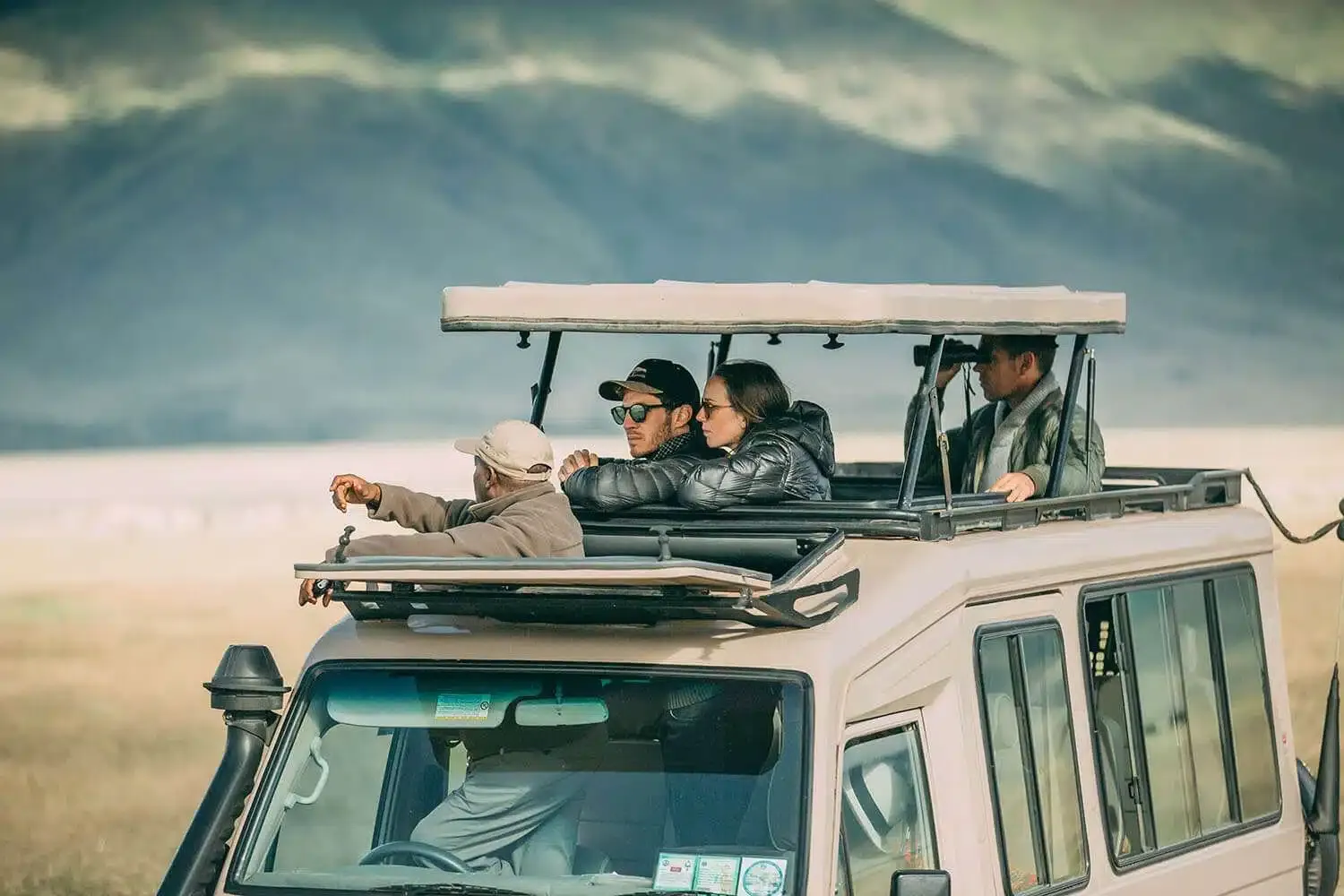
Guests in an open-roof safari vehicle looking out across a wide grass plain, with hills and cloud behind

Seven shallow lakes · Flamingos vary by season

The Momella Lakes

Seven shallow alkaline lakes lie in the north-east of the park, each a slightly different colour with the algae in the water. Giraffe, waterbuck and bushbuck graze the shores against the slopes of Meru, and flamingos and other waterbirds come and go with the seasons.

Canoeing is possible on Small Momella, by arrangement, with buffalo, giraffe and hippo often seen from the shore. It is a very quiet way to watch a park.

Worth booking ahead

Flamingo numbers depend on the lake and the season, so we never promise them. Canoe trips need arranging in advance.

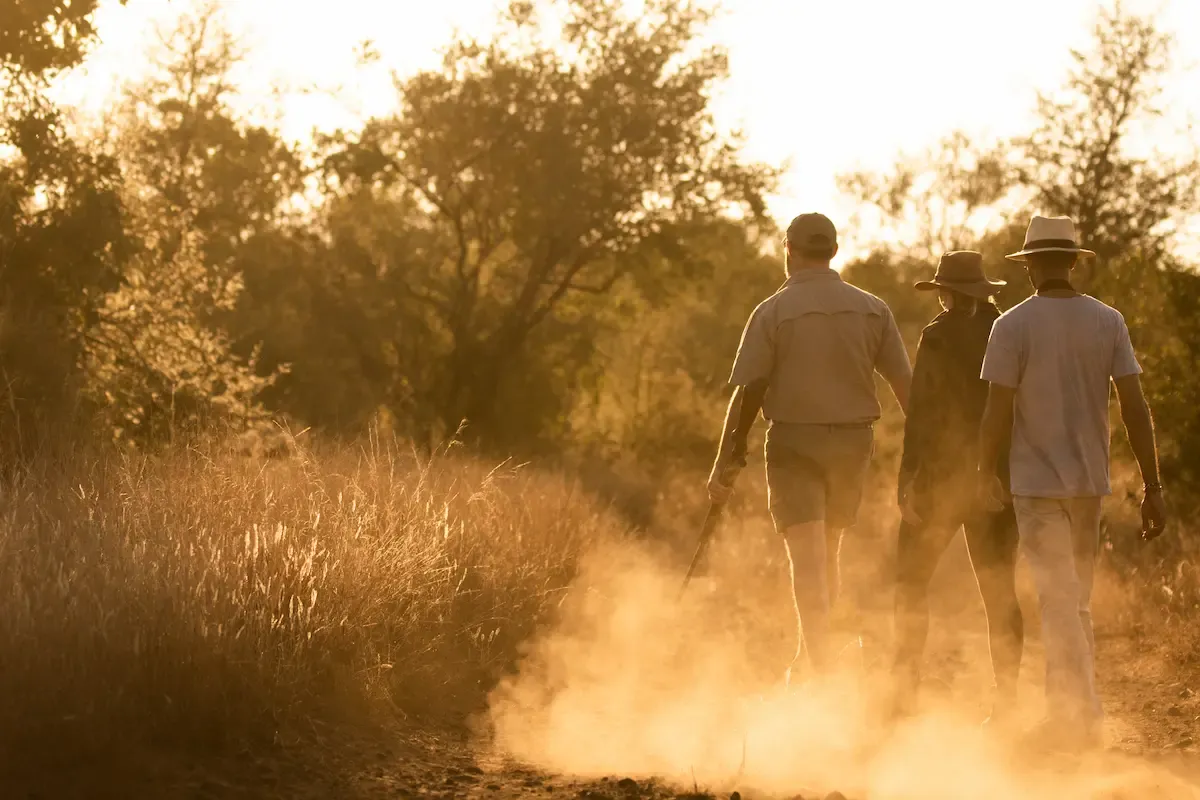
Three people in hats walking on a dusty track among bush in low golden light

Meru’s slopes · Best June to October

Mount Meru and the forest

Meru rises on the park’s western side, and its lower slopes are montane forest with buffalo and monkeys. You can walk the foothills for a morning, or climb to the summit over three or four days with a ranger. Many climbers use it as acclimatisation before Kilimanjaro.

Whether you climb or not, the mountain is what gives the park its character. It shapes the rain, the forest and the light.

Think ahead

The summit climb is a proper mountain trek, with an armed ranger and huts along the route, not a long walk. If you are here for the day, the forest walk is the right size.

Where we stay

Lodges around Arusha and its coffee country make a gentle first night. We choose by how you want to start the trip.

Explore more of our camps

What you will do

Beyond the game drive

Game drives

A half-day loop through forest, crater rim and lakes. Giraffe, buffalo, zebra and colobus monkeys are the usual company.

Walking safaris

Guided walks with an armed ranger, among giraffe and buffalo. They are arranged through the park, so tell us you would like one.

Canoeing

On Small Momella Lake, by arrangement. Around two to three hours on the water, with hippo, buffalo, giraffe and waterbirds on the shore.

Birdwatching

More than 400 recorded species, from forest birds on Meru’s slopes to waders on the lakes.

A typical day

A day at Arusha National Park, usually

It is a small park, so a day here can be unhurried. This is the shape most of them take.

  1. Before dawnCoffee, and the first light on Meru.
  2. First lightInto the forest for colobus monkeys, while the air is cool.
  3. Mid-morningDown to the Momella Lakes, with the mountain behind you.
  4. MiddayLunch with a view, and a rest.
  5. AfternoonA walk with a ranger, or a canoe on the lake.
  6. EveningBack to Arusha, or a quiet night on the park’s edge.

Good to know

The park is small

A loop takes a few hours, so we use it to start or end a trip, not to fill a week.

Cloud and views

Meru and Kilimanjaro are clearest early in the morning and in the dry season. By midday cloud often builds.

Walking

Walks are with an armed ranger, and the pace is set by the slowest walker. Wear closed shoes and bring a rain layer.

Who it suits

Who it suits

Honeymoon

A gentle first day after the flight, on foot among giraffe, with no early alarm and no long drive.

Honeymoon safaris →

Family

Walking and canoeing make a welcome change for children after hours in a vehicle. The distances are short, and there are no lion prides to plan around.

Family safaris →

Friends

A good warm-up for a group that plans to climb: a day in the forest, a walk, and the mountain in view.

Friends safaris →

Routes through Arusha National Park

Arusha National Park: what people ask us first

Is Arusha National Park worth a visit?

Yes, as a half day at the start or end of a trip. It has no Big Five, but it has walking, canoeing, colobus monkeys and a mountain, and it is close to Arusha.

Can we walk in Arusha National Park?

Yes, with an armed ranger. Few large predators live here, which is why walking is a normal part of a visit.

Can we climb Mount Meru?

Yes. It is usually done over three or four days from within the park, and many climbers use it as preparation for Kilimanjaro. We can arrange it with a ranger.

Will we see Kilimanjaro from the park?

Often in the dry season, especially early in the morning. In the rains cloud usually hides it.

How long should we spend here?

Half a day at the least. A night lets you add a walk and a canoe trip.

Tell us when you land. We will tell you how to spend the first day.

Send us your dates and who is coming. Goodluck will come back with a route, and the reasons behind every camp on it.

Begin the conversation

+255 753 744 283 · hello@easguides.travel

Your trip shortlist is empty