+255 753 744 283 | Mon–Fri 8:30AM–5PM · Sat 9AM–4PM EAT
EAST AFRICA · EST. 2021

Your Experiences

Nothing added yet — experiences you add from any page will appear here.

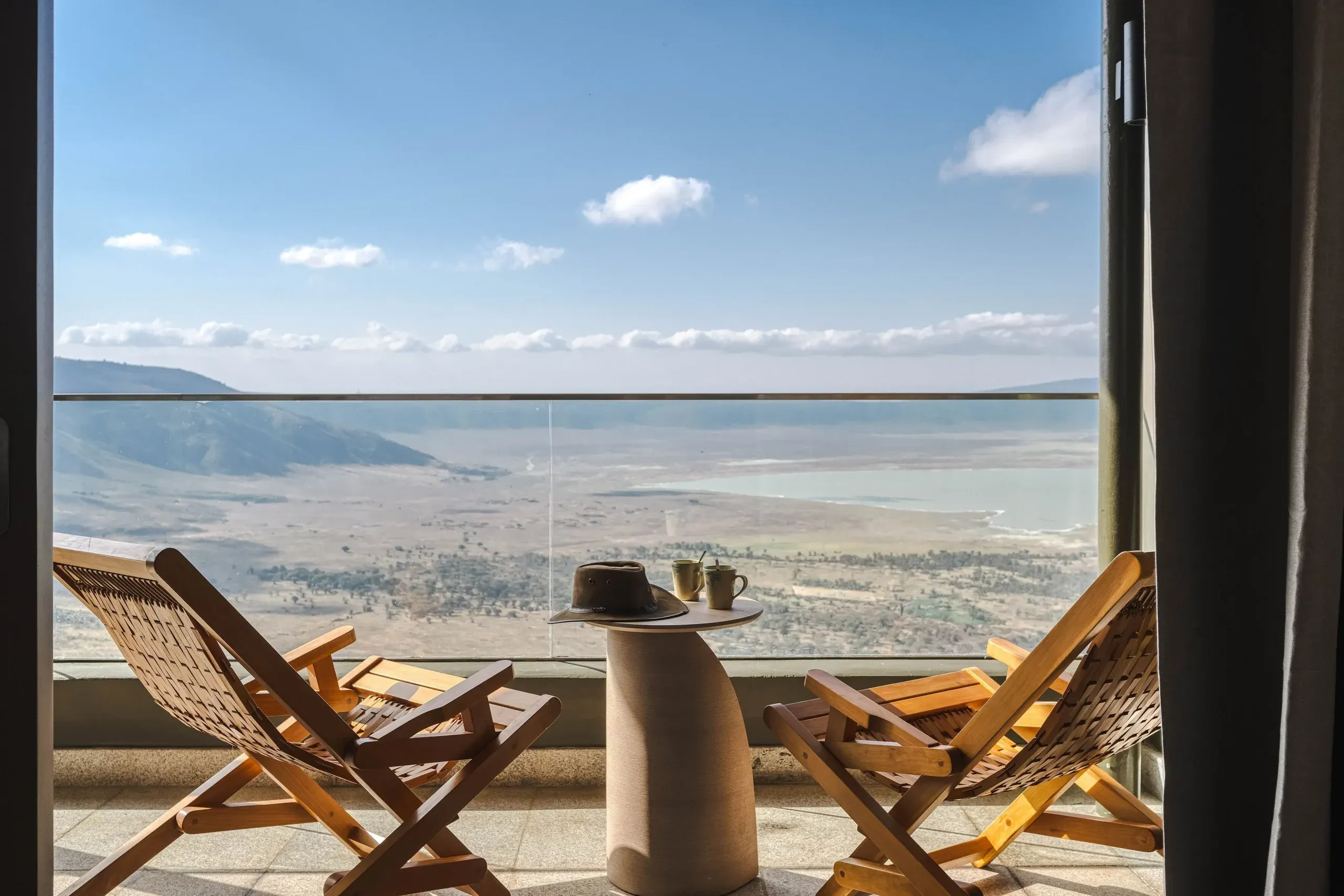
Two wooden chairs on a balcony looking out across a very wide hazy basin ringed by hills

Ngorongoro Conservation Area

A volcano that fell in on itself, and left a bowl full of animals.

Why Ngorongoro

More than a crater

The picture most people carry is the crater from above: a green bowl, a pale soda lake, and animals too small to name. It is every bit as good as the photographs. But the Ngorongoro Conservation Area covers about 8,300 square kilometres, and the crater floor is only a small part of it.

The crater formed two to three million years ago, when a volcano collapsed in on itself. It is about 600 metres deep, and its floor covers about 260 square kilometres. Around it lie highland forest, two more volcanic craters, Olduvai Gorge, and Maasai herders who still graze their cattle among the wildlife. The area has been a UNESCO World Heritage Site since 1979.

Continue readingShow less

Why the crater is not the whole plan

We treat the crater as one very good day, not a whole safari. Go down early, while the light is low and the cats are still moving, and climb out before the vehicles gather. Then spend the rest of your time on the parts of the conservation area most visitors drive straight past: the highlands, the craters of Olmoti and Empakaai, and Olduvai Gorge.

How we plan it

Ngorongoro sits between the Serengeti and the parks of Tarangire and Lake Manyara, so it is the hinge of the Northern Circuit. One night on the rim is the minimum. A second night, or a night in the highlands, changes the whole experience.

Best months
The crater is good all year, and driest from June to October. The southern plains around Ndutu are at their best from December to March.
Getting there
By road from Arusha, roughly four to five hours with stops, by way of Karatu. Most guests go on to the Serengeti from here.
How long
One night on the rim at the least. Two nights lets you do the crater and something else.
Pairs well with
The Serengeti to the west, Tarangire and Lake Manyara on the way, and Zanzibar to finish.

When to go

The year, usually

Northern Tanzania has two rainy seasons and a long dry one. Here is what each means at Ngorongoro.

January and February

Warm and green. Calving begins on the southern plains around Ndutu, part of which lies inside the conservation area. The crater is good and usually calmer than in the dry months.

March to May

The long rains. Tracks soften, cloud sits on the rim, and some camps close or slow down. The crater is at its greenest and visitors are fewest.

June to October

The dry season, and the busiest. Clear mornings, dust, and the most vehicles on the crater floor. The rim is cold at dawn, so we start earliest now.

November and December

The short rains. Showers are usually brief, the grass greens up, and the herds begin to move back towards the southern plains.

Inside the area

Four parts of one conservation area

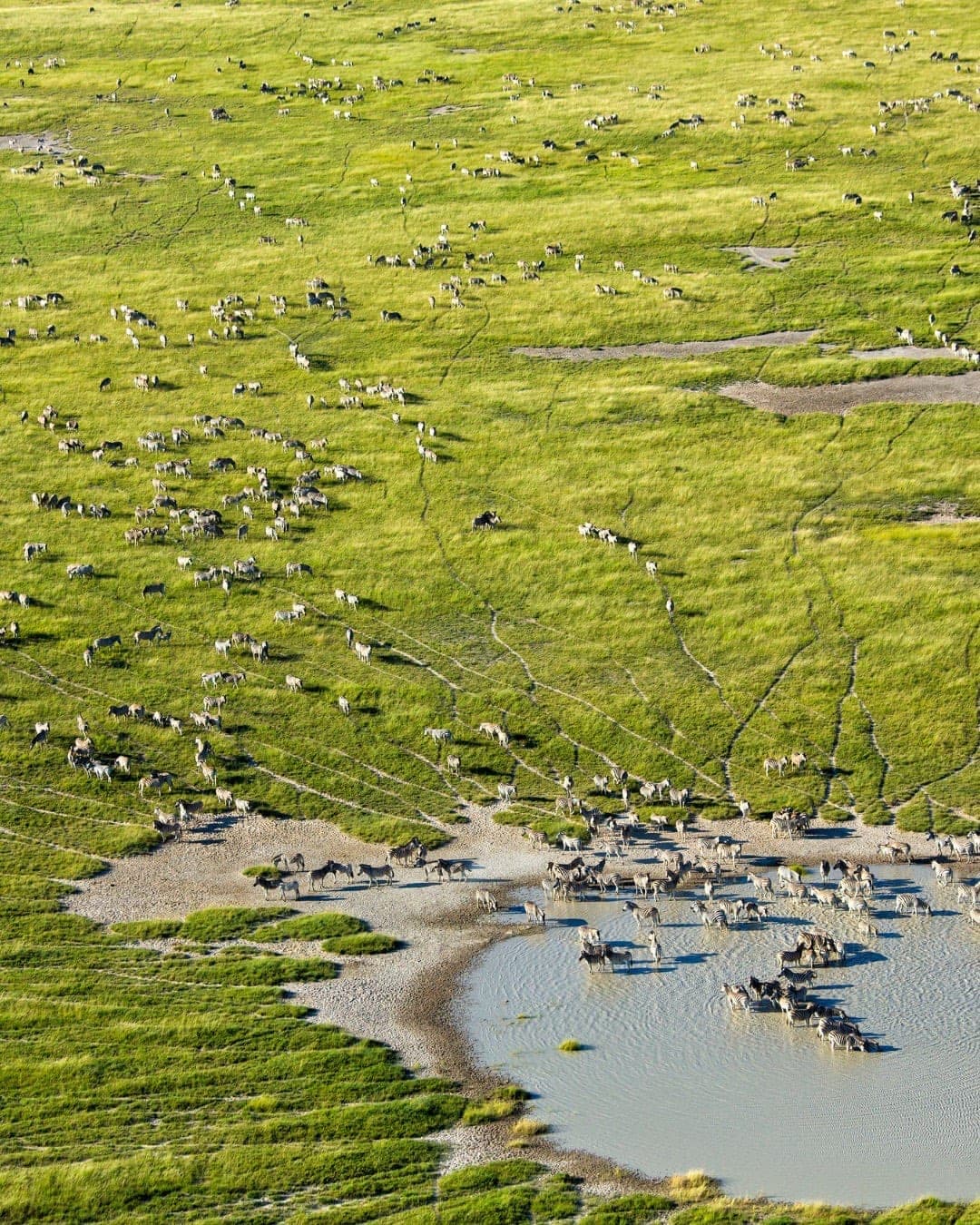
Aerial view of zebra and wildebeest herds scattered across green plains, with animals gathered at a shallow pool

Ngorongoro Crater · Good all year

The crater floor

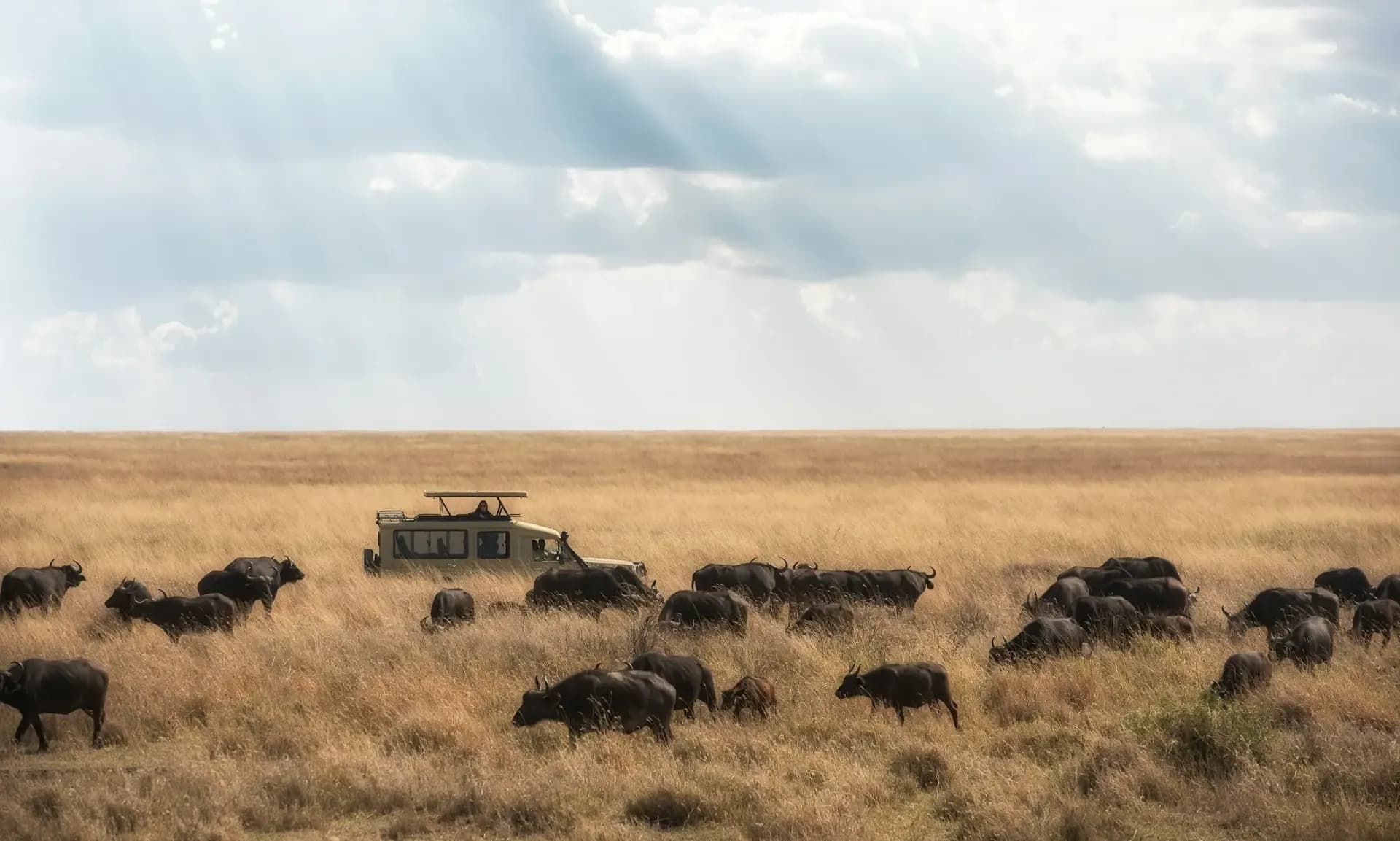
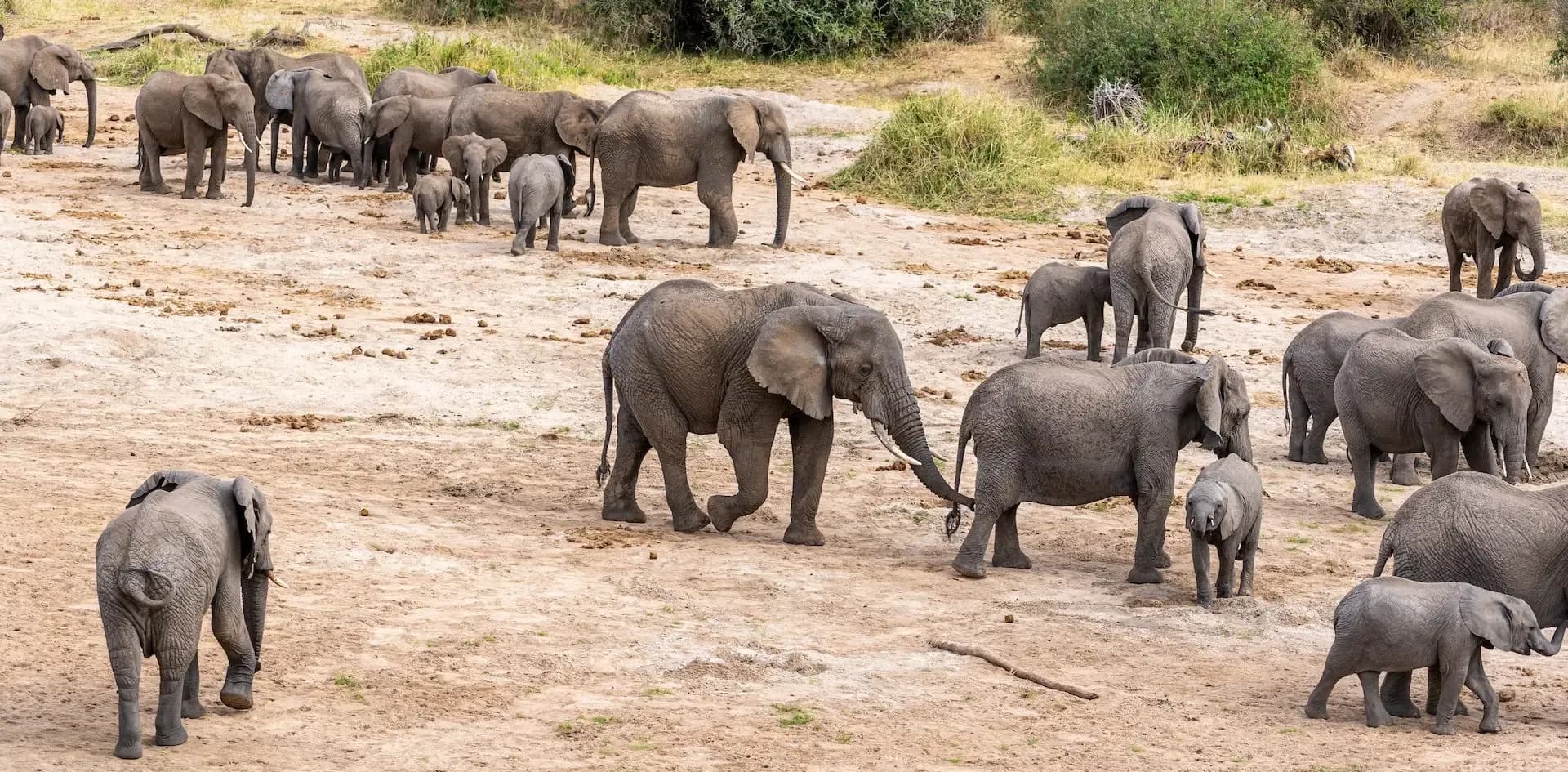
The floor holds grassland, a soda lake, a freshwater spring and a patch of forest, so one day can run from lion to flamingo to hippo. Elephant, buffalo, zebra, wildebeest and hyena live here, and it is one of the few places in northern Tanzania where black rhino are seen with any regularity.

Vehicles go down steep descent roads, and the number allowed in is limited. Driving off the track is not allowed on the crater floor. So the quality of the day depends on when you go down, which road you take, and how well your guide reads where the animals are.

Worth planning for

The floor fills with vehicles by mid-morning. We go down at first light and aim to be climbing out as most people arrive. There is no walking on the crater floor.
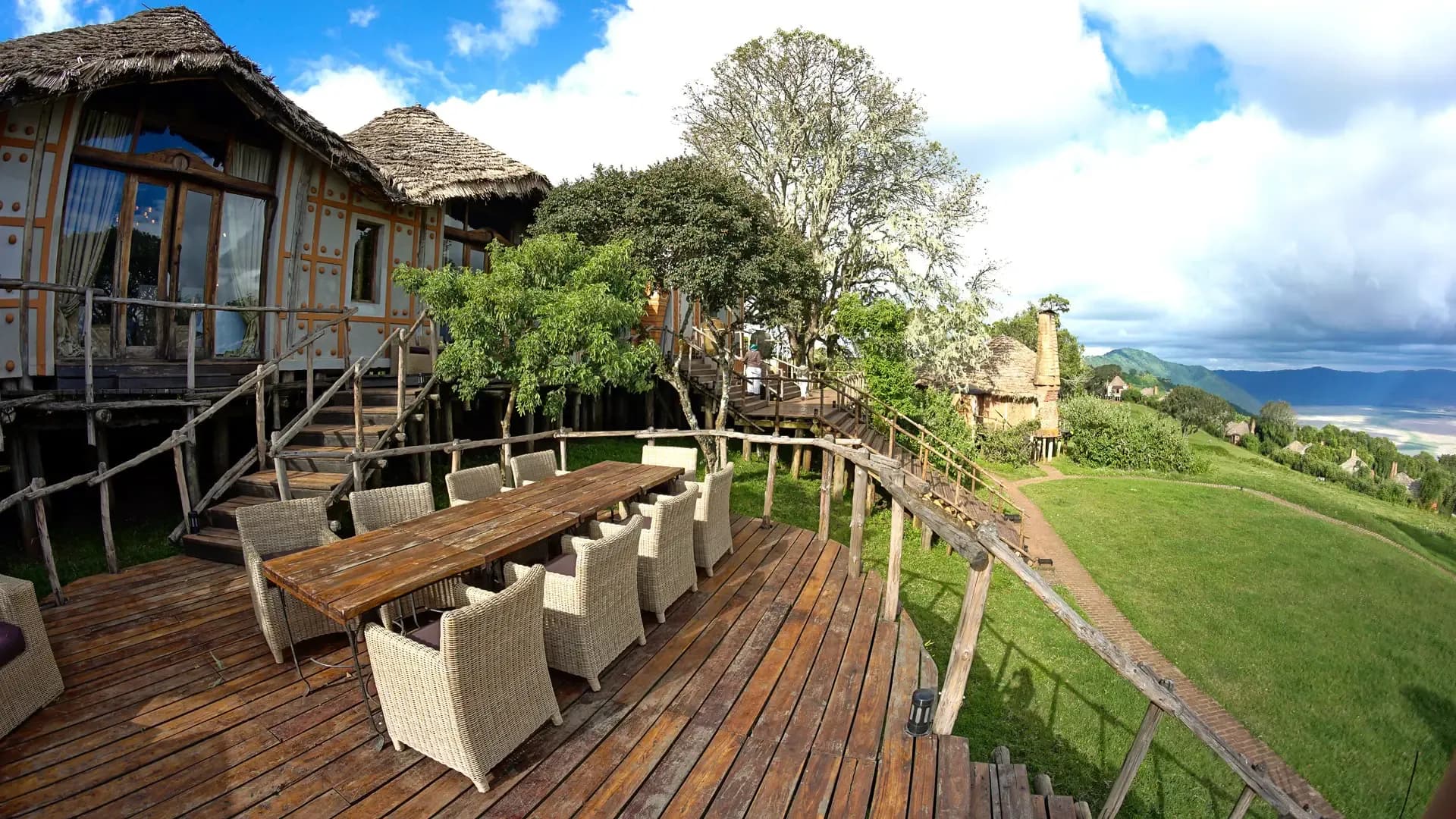
A timber deck with a long dining table and wicker chairs beside thatched suites, above a green slope

Rim camps and the road in · Good all year

The rim and Karatu

Rim camps sit above 2,000 metres, over the cloud on a good morning and inside it on a bad one. The views fall away into the bowl, and the descent roads are a short drive from the door. Further back, the farmland around Karatu makes a gentler first night and a slower start to the circuit.

The rim is also where the temperature changes. Mornings and evenings are cold even in the dry season, so pack real layers and do not trust the weather you left in Arusha.

Know before you go

Rim camps are sold on the view, and the view depends on the cloud. In the dry season a clear morning is likely. In the rains the bowl can stay hidden for a day.

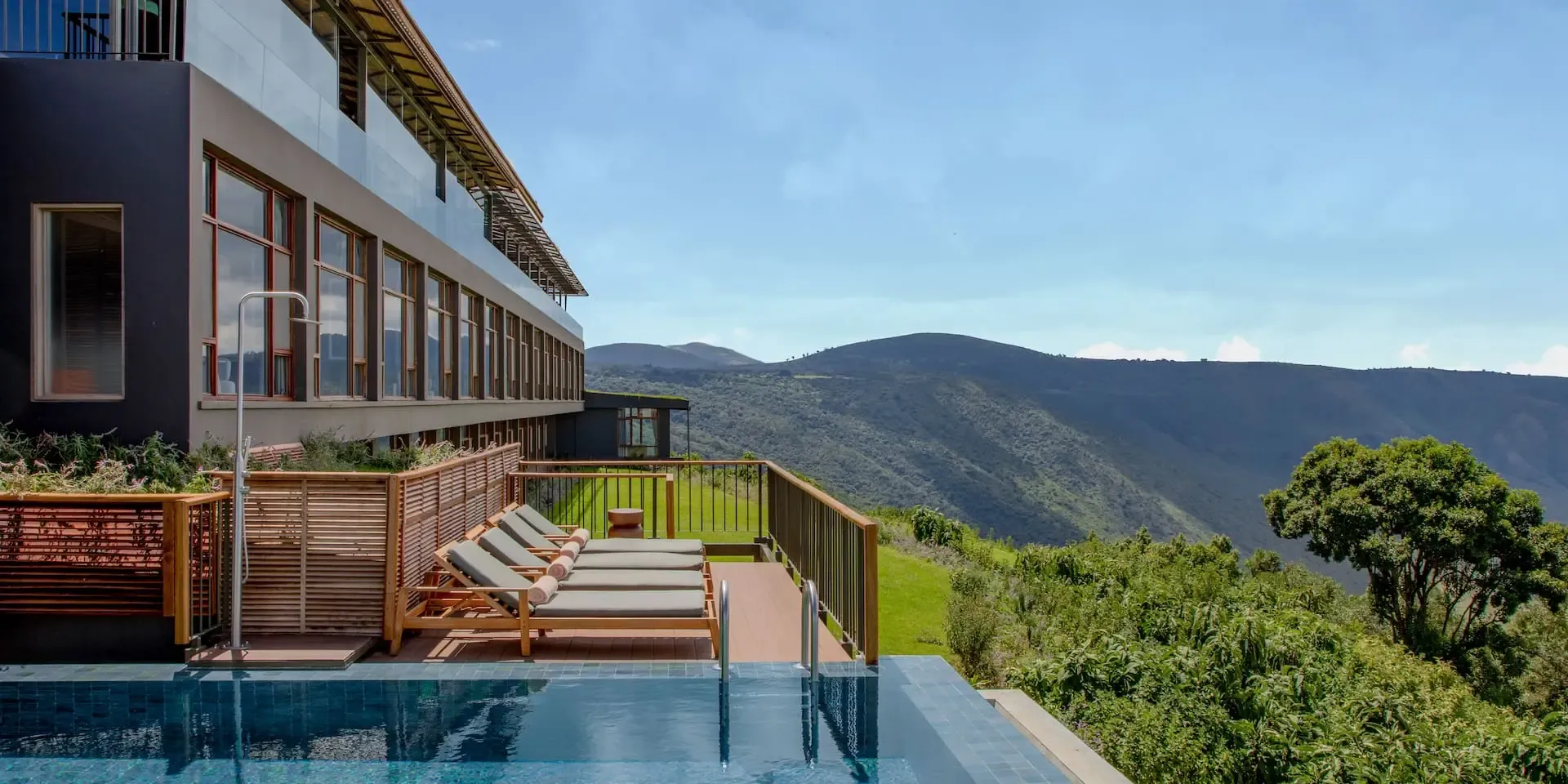
A modern lodge with a plunge pool and loungers beside green hills under a blue sky

Walking country · Good all year

The highlands, Olmoti and Empakaai

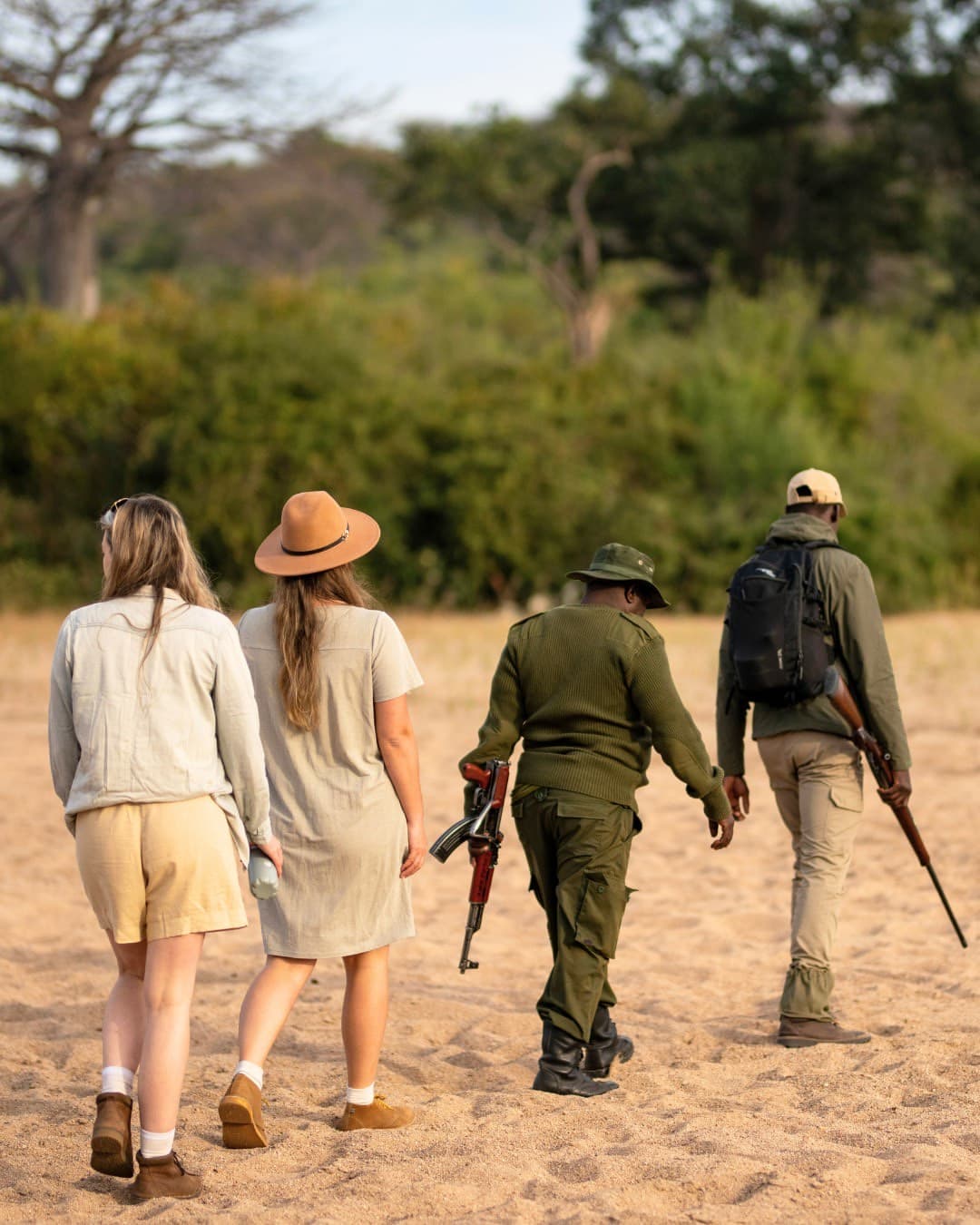
Beyond the rim the conservation area turns to open highland, cool, green and far quieter. Olmoti and Empakaai are two more volcanic craters, and a deep soda lake fills nearly half of Empakaai’s floor. You can walk here with an armed ranger, which you cannot do in the main crater, and Maasai herders still move their cattle across the slopes.

The Highlands camp sits near Olmoti, and visits to Maasai villages can be arranged through your guide or camp, so that the village agrees to them.

Bear this in mind

The roads up here are slow and rough. Empakaai is a long way from anywhere, so treat it as a full day or an overnight, not an hour’s detour.

Two guests and two rangers in uniform walking away along a sandy track beside bush

Where the story of us begins · Good all year

Olduvai Gorge and Laetoli

Olduvai Gorge is a steep ravine on the edge of the Serengeti plains, where fossils of early humans and their relatives have been found. A small museum on the rim explains what was found, and the layers in the gorge wall make the timeline easier to feel than to read.

Some 40 kilometres south, at Laetoli, a trail of footprints pressed into volcanic ash about 3.6 million years ago is among the oldest evidence we have of our ancestors walking upright. Laetoli is remote and best arranged in advance.

The trade-off

Neither site is about wildlife, and both add hours of driving on rough tracks. They work best with a spare day, not squeezed between the crater and the Serengeti.

Explore more of our camps

What you will do

Beyond the crater descent

A crater day

Down at first light, a picnic at one of the designated spots, and out again by early afternoon. Vehicles are limited, so we arrange the descent in advance.

Highland walks

Guided walks with an armed ranger in the highlands and around Olmoti and Empakaai. Not allowed on the crater floor.

Maasai villages

Visits arranged through your guide or camp, so that the village agrees and the time is shared on its terms.

Olduvai and Laetoli

A museum and two sites central to the study of human evolution, for guests who like a safari to come with context.

A typical day

A day on the rim and in the crater, usually

Every day bends to the weather. This is the shape most of them take.

  1. Before dawnTea in the cold, with the bowl still dark below the rim.
  2. First lightDown the descent road as it opens, with low light across the grass.
  3. Mid-morningLion, rhino and elephant, if they are near. The floor is small enough that the animals are rarely far.
  4. MiddayA picnic by the spring, then the climb out before the crowds peak.
  5. AfternoonBack on the rim to rest, or on towards the highlands.
  6. EveningCloud drifting over the rim, a warm room, and an early night.

Good to know

The cold

The rim sits above 2,000 metres. Mornings are cold all year, so bring a proper jacket, a hat and gloves, even in the dry season.

Crater rules

Vehicles in the crater are limited in number and may not leave the track. We arrange descents ahead and keep them to the hours when the light is best.

Slow roads

The tracks to the highlands, Empakaai and Laetoli are slow. Allow a full day for any of them.

Who it suits

Who it suits

Honeymoon

Treat the crater as one perfect morning, then give yourselves the quiet of the highlands. A rim room that looks into the bowl is hard to beat, as long as the cloud agrees.

Honeymoon safaris →

Family

A good first big-game day for older children, because the animals are close and the distances short. Early starts and the cold on the rim suit some children better than others, so we pace it.

Family safaris →

Friends

Easy to share and easy to split: a vehicle for the crater, a walk in the highlands for anyone who prefers it, and everyone back on the rim for dinner.

Friends safaris →

Routes through Ngorongoro

Ngorongoro: what people ask us first

Is the Ngorongoro Crater worth it if it gets busy?

Yes, if it is timed well. We go down early and leave before the busiest hours, and a night on the rim makes that easy.

How long should we spend at Ngorongoro?

One night on the rim is the least, with a morning in the crater. Two nights, or a night in the highlands, adds walking and a quieter side.

Can we walk in the Ngorongoro Crater?

Not on the crater floor. Guided walks are possible in the highlands and around other craters such as Olmoti and Empakaai.

When is the best time to go?

The crater is good all year and driest from June to October. For calving around Ndutu on the southern plains, December to March. The rains, March to May, are the greenest and quietest.

Is it cold?

On the rim, yes, at any time of year. Pack warm layers whatever the month.

Tell us how long you have. We will tell you how to use the crater.

Send us your dates and who is coming. Goodluck will come back with a route, and the reasons behind every camp on it.

Begin the conversation

+255 753 744 283 · hello@easguides.travel

Your trip shortlist is empty