+255 753 744 283 | Mon–Fri 8:30AM–5PM · Sat 9AM–4PM EAT
EAST AFRICA · EST. 2021

Your Experiences

Nothing added yet — experiences you add from any page will appear here.

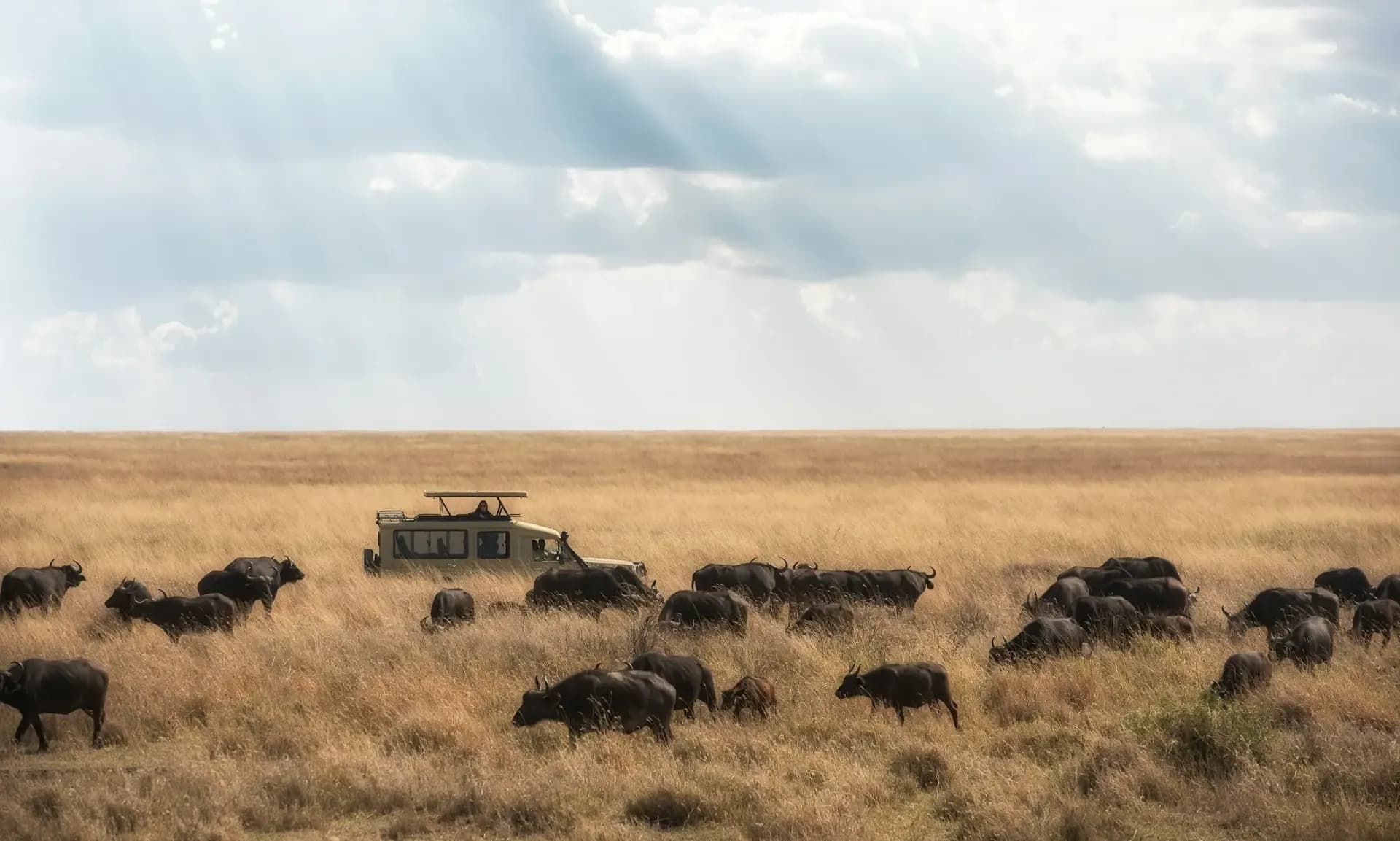
A safari vehicle parked among a large herd of grazing animals on open golden grassland under a cloudy sky

Serengeti National Park

One park, five different Serengetis. The month decides which.

Why the Serengeti

The Serengeti is not one place

The name is widely said to come from a Maasai word, siringet, for the place where the land runs on forever. On the southern plains in the dry season, that holds. Travel north and you are among granite kopjes, river forest and rolling hills, and the idea of one flat, endless Serengeti starts to look like a postcard.

The park covers about 14,750 square kilometres and has been a UNESCO World Heritage Site since 1981. That scale is the first thing to plan around. The herds follow rain, so the zone you sleep in matters more than the camp you choose. A lovely camp in the wrong zone, in the wrong month, is a very comfortable place to wait.

Continue readingShow less

Why one park needs five plans

We think of the Serengeti as five zones: south, east, centre, west and north. Each has its own landscape, its own season and its own kind of day. Below we describe each one plainly, including when we would not send you there.

How we plan it

Most guests do best with two zones, not four, and three nights in each. Moving camp every night is how people come home having spent a safari in the car. A split stay also protects you when the herds arrive earlier or later than the calendar says, which they do. Between zones that are far apart, a short flight from airstrip to airstrip is often kinder than a long day on rough tracks. It is what The Luxury of Time looks like on the ground.

Best months
Depends on the zone. December to March in the south and east, May to July in the west, July to October in the north. The centre is good all year.
Getting there
Flights from Arusha to airstrips inside the park, or a long drive by way of Ngorongoro. Most guests visiting more than one zone fly.
How long
Four nights at the very least. Five to seven, across two zones, is where it starts to feel unhurried.
Pairs well with
The Ngorongoro Crater on the way in or out, Tarangire, and Zanzibar or a private island to finish.

When to go

The year, usually

In a normal year the herds begin on the southern plains, calve there from late January into March, drift north-west through the central and western zones as the grass dries, reach the north from July, and turn south again when the short rains arrive in November. It is a loop, not a single event, and there is something to see somewhere in it every month.

JanFebMarAprMayJunJulAugSepOctNovDec
SouthernNdutu and KusiniHerds usually hereHerds usually hereHerds usually hereHerds usually here
EasternGol Kopjes and NamiriHerds usually hereHerds usually hereHerds usually hereHerds usually here
CentralSeroneraResident game, good all yearResident game, good all yearResident game, good all yearResident game, good all yearResident game, good all yearResident game, good all yearResident game, good all yearResident game, good all yearResident game, good all yearResident game, good all yearResident game, good all yearResident game, good all year
WesternGrumeti and the Western CorridorHerds usually hereHerds usually hereHerds usually here
NorthernKogatende and the Mara RiverHerds usually hereHerds usually hereHerds usually hereHerds usually here
  • Herds usually here
  • Resident game, good all year

The herds follow rain, not dates. Treat every window as a range that can move by weeks. Follow the herds month by month.

Zone by zone

Five zones, in the order the year visits them

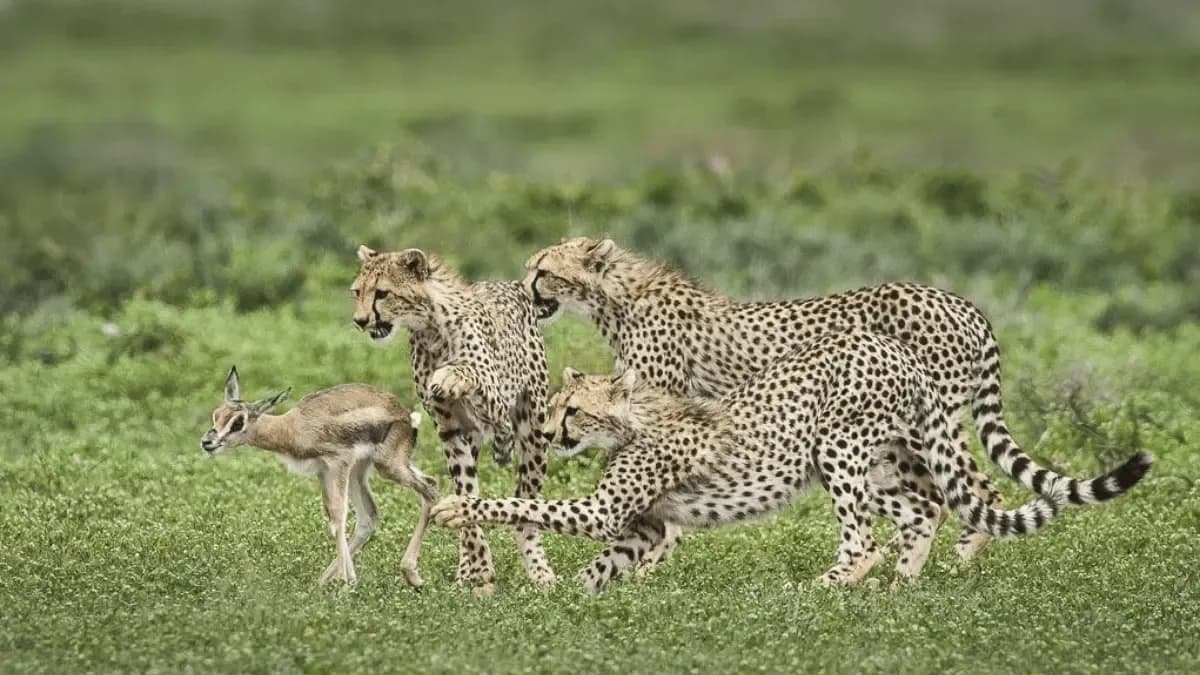
Three cheetahs standing on short green grass beside a small antelope

Ndutu and Kusini · Best December to March

Southern Serengeti

Open short-grass plains on volcanic soil, and for a few weeks a year the busiest nursery in East Africa. Wildebeest calve here from late January into March, usually peaking in February, and thousands of calves can arrive in a single day. Where there are newborns there are hunters: lion, hyena, jackal and, out on the open grass, cheetah.

Parts of the Ndutu area lie inside the Ngorongoro Conservation Area, where driving off the track is allowed. The national park next door does not allow it. A good guide knows exactly where the line runs, and uses the side that gives you the sighting.

What to expect

The herds do not keep a diary. Some years they are on the plains by December, in others they hold back until the rains come. This is green season, so expect an afternoon shower on some days. If your dates are fixed, we plan a split stay so one move can follow the herds.

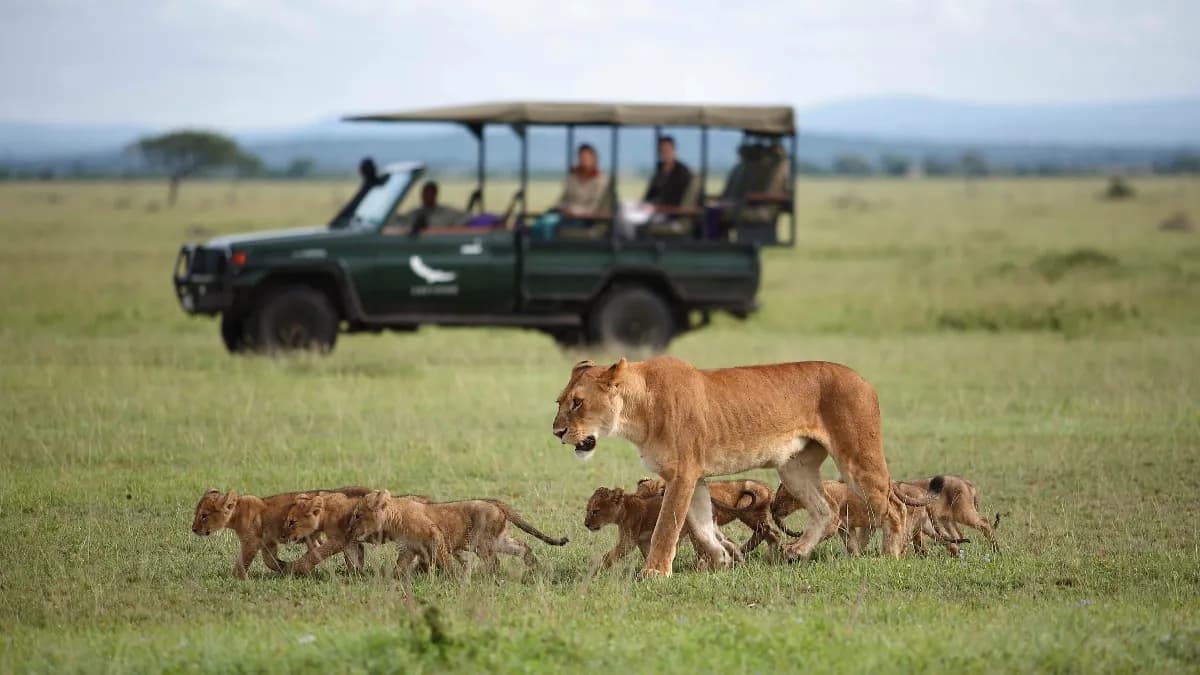
A lioness walking with her cubs on short green grass beside a safari vehicle, hills and open sky behind

Gol Kopjes and Namiri Plains · Best December to March

Eastern Serengeti

Short grass again, but wilder and emptier. The Gol Kopjes rise from the plain like islands, and the country around them is known for cheetah and lion. Namiri Plains lies well away from the central roads and few camps serve it, which means long views and very few other vehicles.

In November the return south often passes through this side of the park, so it can also be a quieter choice than the busiest calving camps. For photographers it can be the best ground in the park: open light, low horizons, and room to wait.

Plan around this

It sits far from the central roads, so transfers need careful planning, and it works best as one of two stops rather than the only one.

Where we stay

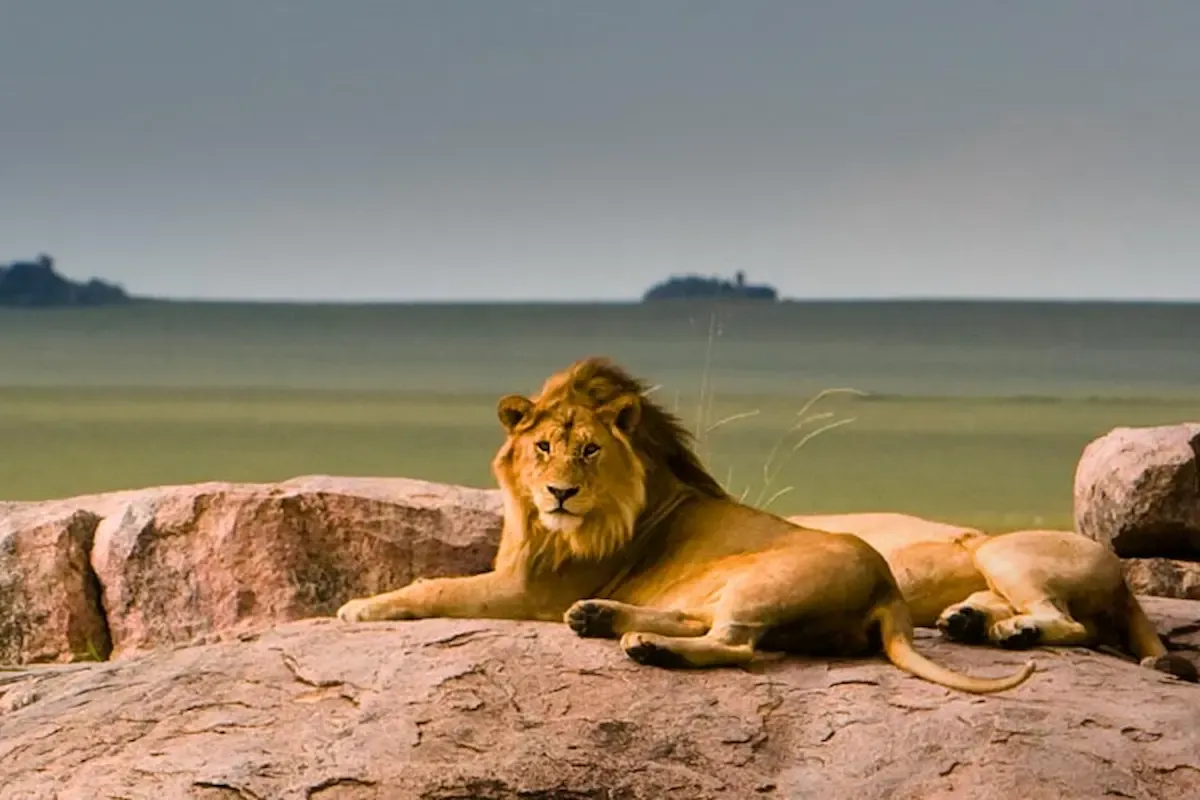
A lion resting on a large granite boulder, a wide grass plain stretching behind it

Seronera · Good all year

Central Serengeti

The Seronera River valley holds water and resident game when other places dry out, which makes it the most dependable zone for lion and leopard. Kopjes rise out of the grass, and the trees along the river give leopards somewhere to rest. To the south, the Moru Kopjes carry Maasai rock paintings. Dawn balloon flights lift off in this zone, too.

If you have only a few nights, or you are travelling outside the migration windows, this is the zone that rarely lets you down.

A fair warning

It is also the busiest part of the park, and the tracks around Seronera fill up in high season. We start early, leave when the vehicles gather, and look for the quieter loops. Tsetse flies live in some of the wooded areas. They bite sharply, and your guide will tell you what to wear.

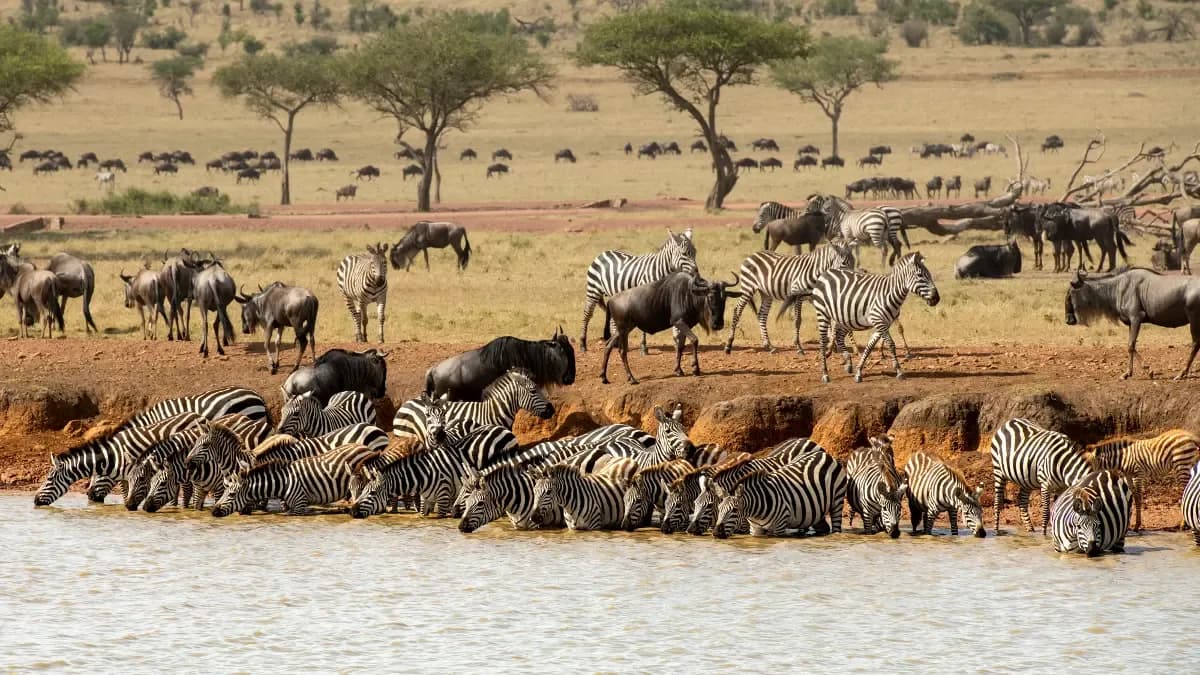
Zebras drinking at a river edge, with wildebeest and acacia trees behind them on the bank

Grumeti and the Western Corridor · Best May to July

Western Serengeti

As the plains dry, the herds push north-west into the Western Corridor, a band of woodland and river forest along the Grumeti River. The river holds crocodiles, some of them very large, and herds that gather on its banks sometimes cross.

The crossings here are smaller and less predictable than the Mara River's, which is part of why they are quieter. Beyond the park boundary lies the Grumeti Private Reserve, where night drives and guided walks are allowed. A few days beside the river there is a different kind of safari from the national park's.

Keep in mind

Crossings are not a timetable. Some days the herd stands at the water and turns away. If seeing a crossing is the whole point, the north is the safer bet. The west suits guests who value the river country as much as the crossing.

Where we stay

Singita Sasakwa LodgeSingita Faru Faru Lodge
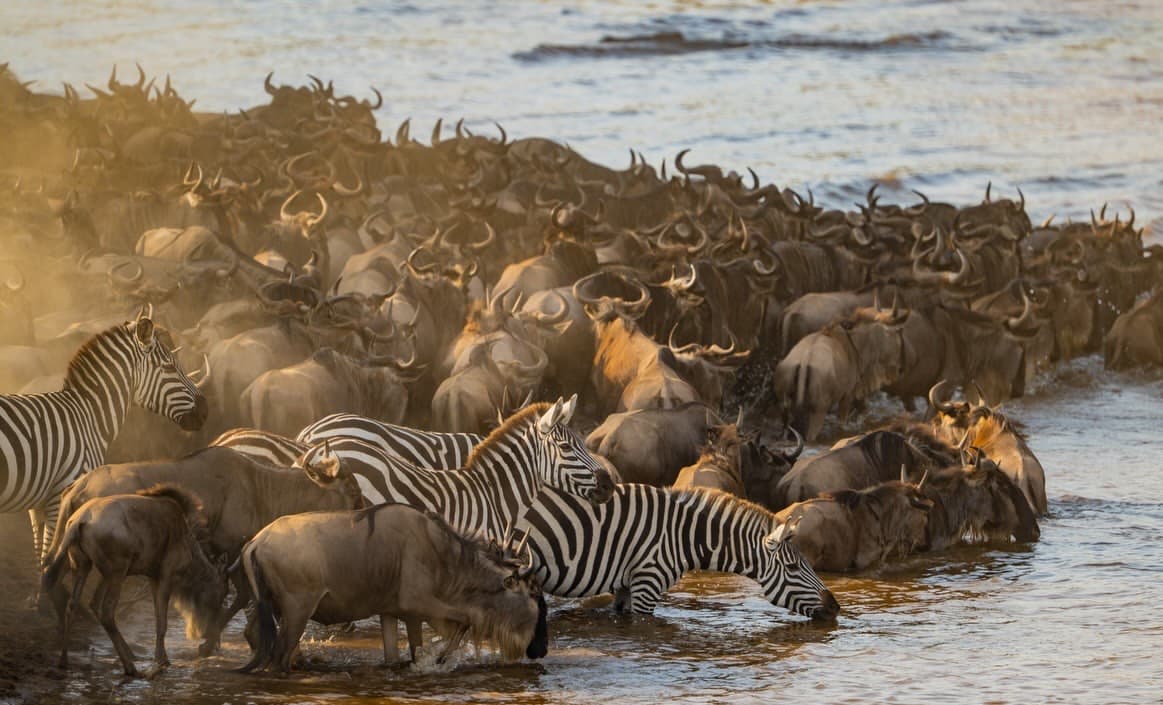
Wildebeest and zebras crowded together at the edge of a river, drinking

Kogatende, Lamai and the Mara River · Best July to October

Northern Serengeti

The herds usually reach the north in July and spend the dry months around the Mara River, crossing and re-crossing between Tanzania and Kenya's Masai Mara. Thousands of wildebeest bunch on the bank, hesitate, then go all at once, with crocodiles waiting in the water. Between crossings there is a north of rolling hills and big-cat country that most visitors never see.

It is remote, with fewer roads and fewer camps than the centre. A few camps here are permitted to offer guided walks, which is rare inside the park.

Before you commit

Crossings cannot be promised, and the popular crossing points can fill with vehicles. We choose each day's position by where the herd is and when, not by where the crowd is, and we are honest that some days are only waiting.

Explore more of our camps

What you will do

Beyond the game drive

Game drives

Half days or full days with a packed lunch, in a vehicle with a pop-up roof. An early start matters more than any camp.

A dawn balloon flight

Flights lift off before sunrise from sites that include Seronera, last about an hour, and end with a bush breakfast. The minimum age is generally seven and flights are not recommended in pregnancy, so we check before you book. Weather decides whether it flies.

Balloon Safari Over the Serengeti →

On foot

Inside the park, guided walking is limited to a few wilderness areas and a handful of permitted camps and operators. In the private reserves beside it, walks are far more widely offered.

After dark

Night drives are not allowed inside the national park. They are possible in private reserves such as the Grumeti Private Reserve.

A typical day

A day in the Serengeti, usually

Every day bends to the herds and the weather. This is the shape most of them take.

  1. Before dawnTea or coffee outside the tent, in the half-light.
  2. First lightOut in the vehicle while the cats are still moving and the air is cool.
  3. Mid-morningBreakfast, either in the bush or back at camp.
  4. MiddayRest through the heat. Read, sleep, watch the waterhole from the deck.
  5. Late afternoonA second drive, when the light turns gold and the plains come alive again.
  6. EveningBack at camp as the light goes. Dinner, then the sounds of the night outside the tent.

Good to know

Distances

The park is bigger than most people expect. Moving between zones by road can take most of a day on rough tracks, which is why we prefer a split stay and, where it helps, a short flight.

Weather

June to October is dry and dusty, and early mornings can be cold in an open vehicle. The long rains, roughly March to May, turn tracks soft, and some camps close or reduce their service.

Seeing it all

Nobody sees every zone in one trip, and nobody should try. Pick the month, pick one or two zones, and give them time.

Who it suits

Who it suits

Honeymoon

Choose one quiet zone, a tent set apart from the others, and book the dawn balloon. The north and the east give you the most space.

Honeymoon safaris →

Family

The Serengeti rewards patience, and young children do not always have it. Shorter drives, a camp with room to move, and the south in calving season, when animals are everywhere, tend to work well. Balloon flights have a minimum age.

Family safaris →

Friends

One vehicle, one plan, and an argument settled in advance about who is getting up for the balloon. Split the stay between a zone that suits the season and one that suits the group.

Friends safaris →

Routes through the Serengeti

Serengeti: what people ask us first

When is the best time to visit the Serengeti?

There is no bad month, only a right zone. Roughly, January to March in the south and east for calving, May to July in the west, July to October in the north. The centre is good all year. Tell us your dates and we will choose the zone.

How many nights do we need?

Four at the very least. Five to seven, split across two zones, lets you stay long enough to learn a place instead of passing through it.

Should we fly or drive in?

Most guests visiting more than one zone fly between airstrips. A drive makes sense when you are already travelling by way of Ngorongoro and want to see the road. Tracks are rough and the distances are larger than the map suggests.

Can we see the Great Migration all year?

The herds live in the Serengeti and Masai Mara all year, so there is always a part of the loop to see. River crossings are only one part of it, and they cannot be promised on any given day.

Is the Serengeti crowded?

Parts of it can be, mainly around Seronera and the popular river crossings in high season. We avoid the worst of it with early starts, quieter zones and a split stay.

Tell us your month. We will tell you which Serengeti.

Send us your dates and who is coming. Goodluck will come back with a route, and the reasons behind every camp on it.

Begin the conversation

+255 753 744 283 · hello@easguides.travel

Your trip shortlist is empty