+255 753 744 283 | Mon–Fri 8:30AM–5PM · Sat 9AM–4PM EAT
EAST AFRICA · EST. 2021

Your Experiences

Nothing added yet — experiences you add from any page will appear here.

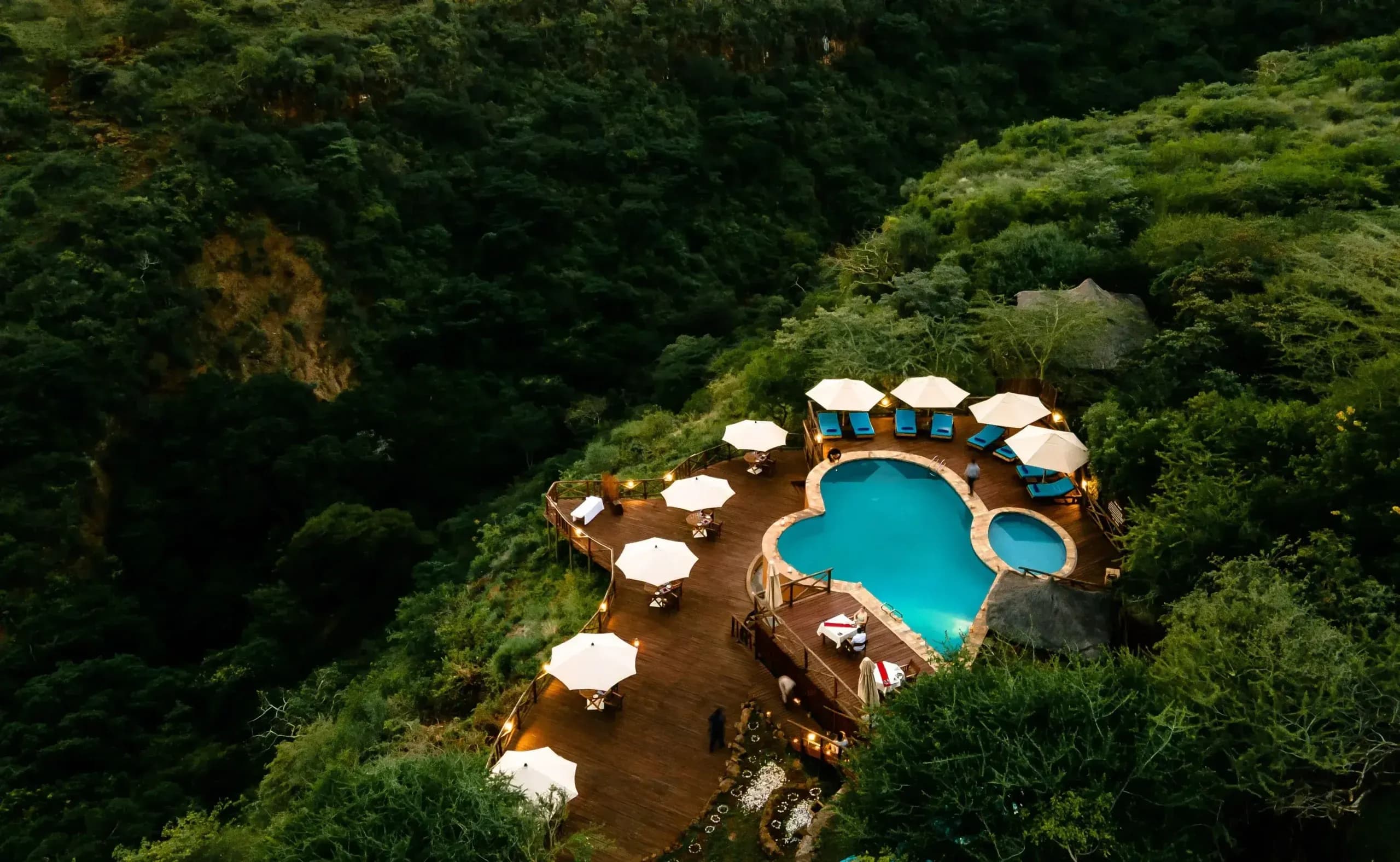
Aerial view of a pool deck with white umbrellas and loungers set into a dense green forested gorge at dusk

Lake Manyara National Park

A narrow park between a lake and a wall of rock.

Why Lake Manyara

Small park, wide range

Lake Manyara is a slim park, squeezed between a soda lake and the steep wall of the Rift Valley escarpment. In a single morning you can pass through groundwater forest, open acacia woodland and the lake shore, which is a lot of variety for one park.

It covers about 330 square kilometres, and much of that is lake, so the land you can drive is a narrow strip. It is also close, around two hours from Arusha. Most people give it half a day on their way somewhere else. A night or two gives you the forest in the quiet hours, when it feels like a different place.

Continue readingShow less

What it is known for

The tree-climbing lions are the headline, though they do not climb on request. In some parts of the park lions rest in the branches, probably to escape the heat and the biting flies, though researchers still debate the reason. Elephants, large baboon troops and hippo pools give the forest much of its life, and flamingos gather on the lake when conditions suit them.

How we plan it

We pair Manyara with Tarangire, or with a night on the escarpment, rather than treating it as a stop on the way. Done that way it becomes one of the more relaxed days of the circuit.

Best months
June to October for game. November to June for birds, though flamingo numbers follow the lake, not the calendar.
Getting there
Around two hours by road from Arusha, on a paved road to Mto wa Mbu.
How long
Half a day at the least. One or two nights is better.
Pairs well with
Tarangire next door, Ngorongoro above it, and the Serengeti beyond.

When to go

The year, usually

Northern Tanzania has two rainy seasons and a long dry one. Here is how each looks at Manyara.

January and February

Warm and green, with migrant birds in. The lake can be higher or lower depending on the rains.

March to May

The long rains. The forest is at its lushest, some tracks turn soft and a few lodges slow down. Quiet.

June to October

Dry and clear, and the best months for game. Mornings are the calmest time in the forest.

November and December

The short rains. Showers, fresh green, and good birding.

Inside the park

Three kinds of Manyara

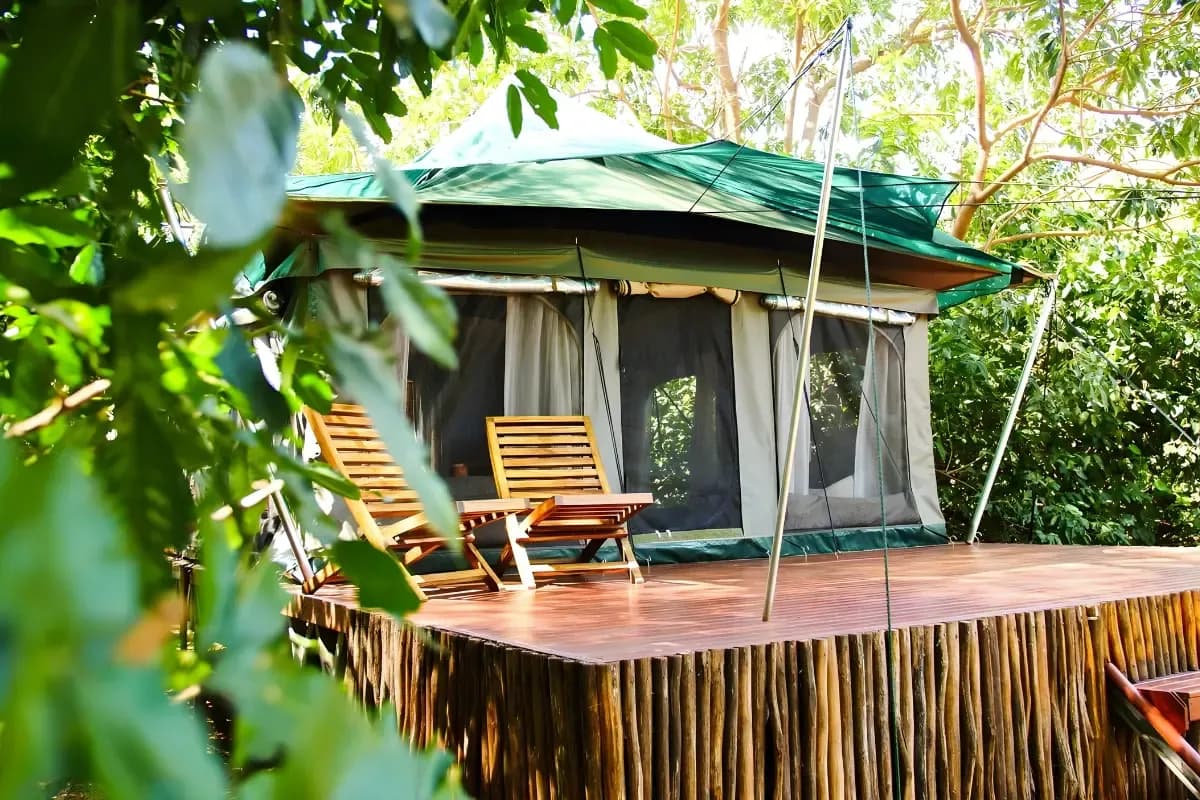
A green canvas safari tent on a timber deck, with two wooden loungers, among leafy trees

Park entrance and the northern road · Good all year

The groundwater forest

Springs seeping from the escarpment feed a forest of mahogany and fig trees right at the entrance. Large troops of baboons live here, along with blue monkeys and elephants that walk straight past the vehicle. It is shady, loud with birds and very different from the open plains.

Hippo pools and forest trails sit along the way. A treetop walkway in the forest lifts you into the canopy. Ask us whether it suits your dates.

Worth knowing

The forest is thick, so sightings are close rather than far. It is also humid by midday, and the light is best early.
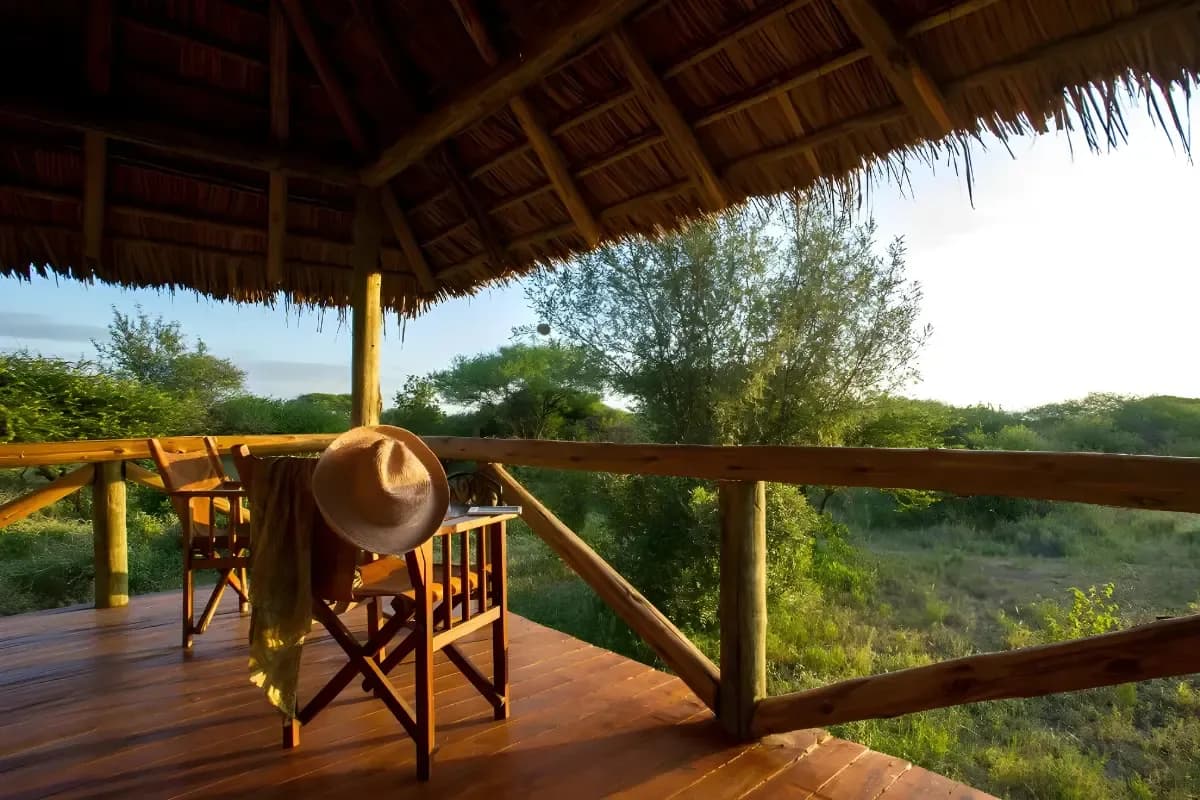
A timber deck under a thatched roof with folding chairs, looking out over green bush in evening light

The southern woodland · Best June to October

The acacia woodland and the lions

Further south the forest gives way to acacia woodland, where Manyara’s tree-climbing lions are most often found, resting in the branches in the middle of the day. Giraffe, zebra and buffalo graze the open ground between the trees.

The best chance comes on a long, quiet loop: drive slowly, scan the branches, and let the guide’s patience do the work.

Temper expectations

Tree-climbing is not guaranteed. On many days the lions are on the ground and out of sight. Treat a sighting as a gift, and the forest as the day’s main event.

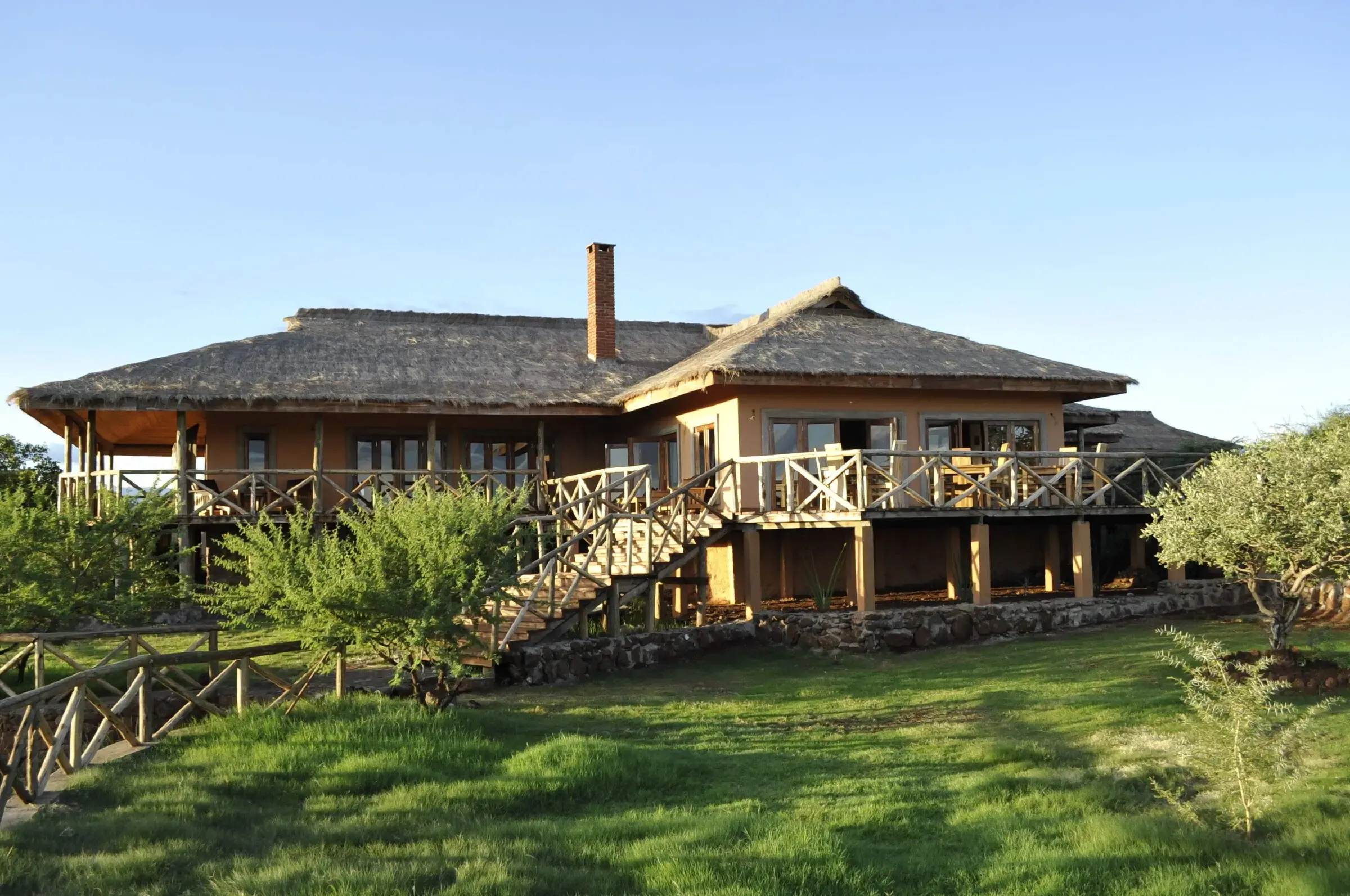
A thatched lodge with timber verandas on a grassy slope under a clear blue sky

Lake Manyara and the Rift wall · Flamingos vary with the lake

The lake shore and the escarpment

The soda lake is the park’s mirror: pale, shallow and busy with pelicans, storks and, when conditions suit, flamingos in large numbers. Above it the escarpment rises like a wall, and lodges along its edge look down on the lake.

Outside the gate, Mto wa Mbu is a lively market town where cultural programmes, canoe trips on the lake and bicycle rides can be arranged.

Good to be aware of

Flamingo numbers follow the lake’s level and the season, so we never promise them. Ask us before you plan around them.

Where we stay

Lodges along the escarpment look down over the lake. Camps outside the park boundary can offer walks and night drives that the park itself does not.

Explore more of our camps

What you will do

Beyond the main road

Game drives

Half-day loops through forest, woodland and lake shore. Early starts for the forest, afternoons for the lions.

A treetop walk

A walkway lifts you into the forest canopy, where blue monkeys and forest birds live. Ask us whether it suits your dates.

Lake and village

A canoe trip or a bicycle ride from Mto wa Mbu, through its cultural tourism programme.

Birdwatching

More than 400 recorded species, from forest hornbills to pelicans and flamingos.

A typical day

A day at Lake Manyara, usually

Manyara is a gentle park, and its days are too. This is the shape most of them take.

  1. Before dawnTea at camp, with the first light on the escarpment.
  2. First lightInto the forest while the baboons are still waking up.
  3. Mid-morningOut onto the woodland loops, scanning the branches.
  4. MiddayA long lunch and a rest, while the heat passes.
  5. Late afternoonThe lake shore, with the light low across the water.
  6. EveningBack along the escarpment as the lake turns silver.

Good to know

The size

The drivable part of the park is a narrow strip, so drives are shorter than in the big parks. It suits a half day or a gentle full one.

The lake

Its level changes through the year and from year to year. Flamingos come and go with it.

Insects

Tsetse flies in the acacia woodland, and mosquitoes by the water in the evening. Wear long sleeves at dusk.

Who it suits

Who it suits

Honeymoon

A gentle day with a view: forest in the morning, lake in the afternoon, and a lodge on the escarpment to watch it from.

Honeymoon safaris →

Family

A good one for children. Monkeys, baboons and elephants come close, and the distances are short. We check any age limits for activities such as the treetop walk.

Family safaris →

Friends

A relaxed day for a group, with something of everything: a bicycle ride in Mto wa Mbu, a canoe on the lake, then the park.

Friends safaris →

Lake Manyara: what people ask us first

Is Lake Manyara worth visiting?

It is compact rather than dramatic. Most guests give it half a day or one night between Arusha and the crater. If your trip is short we would choose Tarangire first, but Manyara adds forest, lake and a quieter day.

Will we see the tree-climbing lions?

Possibly, but not reliably. They rest in the branches in some parts of the southern woodland, yet on many days they are on the ground. Your guide will look, and we never promise them.

Are there always flamingos?

No. Flamingo numbers depend on the state of the lake and the season. We will tell you what the lake is doing before you plan around them.

How far is it from Arusha?

About two hours by road, on a paved road to Mto wa Mbu. The park gate is a short drive beyond.

How long should we stay?

Half a day at the least. One or two nights lets you enjoy the forest early and late, and add Mto wa Mbu.

Tell us your route. We will tell you whether Manyara earns a night.

Send us your dates and who is coming. Goodluck will come back with a route, and the reasons behind every camp on it.

Begin the conversation

+255 753 744 283 · hello@easguides.travel

Your trip shortlist is empty